 Version : English – Française
Excerpts translated by Nicolas Sperry-Guillou from Réda Benkirane, La Complexité, vertiges et promesses. Histoires de sciences. Nouvelle édition, Benguerir, UM6P-Press, 2023.
[Algorithm, Algorithmic information theory, Belouzof-Zhabotinsky chemical reaction, Boolean automata networks, Brownian motion, Cellular automaton, Combinatorial optimization, Cybernetics, Entropy, Feynman’s sum, Fitness landscape, Frankfurt School, Gauss Carl Friedrich, Growth problems, Hilbert David, Incompleteness theorem, Koch von, Helge, Kuhn Thomas, Laplace Pierre-Simon de, Learning curves, Lorenz Edward, Mandelbrot Benoît, Moore’s Law, Occam’s razor, Power law, Randomness, Red Queen, Regulatory genetic network, Riemann Bernhard, Schrödinger equation, Self-organized criticality, Spin networks, String theory, Symmetry, Tabula rasa, Thermodynamics, Traveling Salesman, Turing effect, Turing Machine, Uncertainty principle, Weierstrass Karl]
Algorithm: the set of operating rules whose application enables a problem involving calculation to be solved by means of a finite number of operations. The word comes from the name of the 9th-century Persian astronomer and mathematician Muhammad ibn Musa Al-Khawarizmi (c. 780-850, Latinized as algorithmus), who is credited with introducing algebra, the rules of arithmetic, and trigonometric tables to Europe. Al-Khawarizmi, a scholar from Baghdad’s school of Wisdom, is also the author of the first book devoted to algebra (Kitab al jabr wal muqabala) and a treatise on arithmetic (Al jam’ wal tafriq bil hisab al Hind, translated into Latin in the 12th century), which sets out all the rules of calculation from India. It was this work, which included a chapter on calculations related to trading activities, that was instrumental in introducing the Indo-Arabic numbering system to societies still unfamiliar with written calculation.
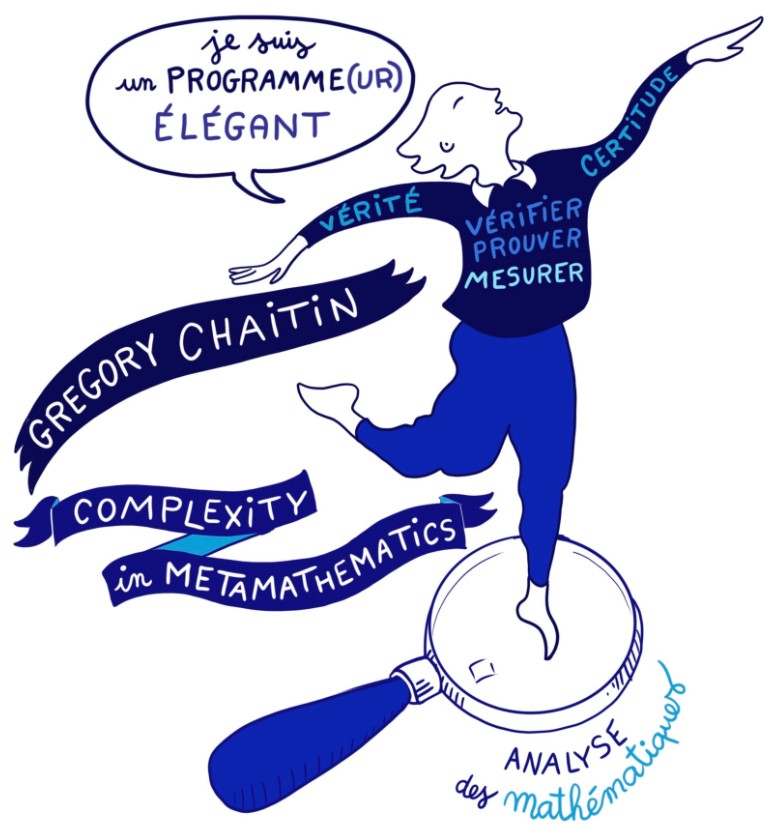
Algorithmic information theory: Gregory Chaitin was one of the key architects of algorithmic information theory, alongside mathematicians Kolmogorov and Solomonoff. Developed in the 1960s, this theory aims to determine the degree of complexity of an object or a mathematical statement by measuring the minimum amount of information required to generate it. From this general principle, this approach has focused on information compression and the calculation problems that may or may not be feasible in computer science. It was subsequently generalized to measure the information content of formal logical systems, which consist of sets of axioms and theorems. From this perspective, scientific theories themselves are viewed as algorithms and compressions of information that describe the complexity of natural phenomena. In the span of a few decades, algorithmic information theory has emerged as a universal tool for measuring complexity.
Belouzof-Zhabotinsky chemical reaction: one of the most typical examples of dissipative structures, i.e. structures that undergo variations over time. Named after two Russian scientists who observed it in the 1950s and 1960s, it was the first manifestation of self-organization in chemistry. For a long time, however, it was ignored by chemists all over the world, as their discipline essentially dealt with chemical reactions whose products proceeded from a stable, monotonous evolution. It wasn’t until the early 1970s that scientists began to take an interest in the spatio-temporal patterns of this chemical reaction. These patterns were studied by computer simulation, in particular using cellular automata, and it was found that they were surprisingly reminiscent of several biological phenomena, such as the dissipative structures found in a medium of amoebae (Dictyostelium discoideum), which have the particularity of being both unicellular and multicellular during their life cycle, or the activity of heart cells, which oscillate independently of each other during fibrillation (desynchronization of the cardiac rhythm that can lead to death). What these various physico-chemical phenomena have in common is not their components, but the dynamics of their interactions.
Boolean automata networks: sets of automata which, when randomly connected, generate particular collective behaviors.
Brownian motion: describes the erratic movement of microscopic particles in a fluid, and is named after the British botanist Robert Brown (1773-1858), who observed in 1828 that pollen grains suspended in water were subject to disorderly motion. Brownian motion, which in fact reflects the thermal agitation of atoms and molecules, was first studied by Albert Einstein in 1905 and then by French physicist Jean Perrin, who described it in 1913 in his book Les Atomes. It was mathematically conceptualized in 1923 by the American mathematician Norbert Wiener, in order to study other random physical processes.
Cellular automaton: modeling of the interaction of a large number of elements, whose individual behavior has been simplified to the extreme for study purposes. A cellular automaton evolves in a diagram representing its space-time, its state depending at each instant t on the state of its neighbors, according to a rule that can be modulated at will. The automaton calculates its state and that of its neighbors, applies the predefined rule, then determines its next state. Once all the cells have recalculated their respective states, the process starts again for each time step. In this way, we can demonstrate that, starting from extremely simple operating rules and initial conditions, cellular automata are capable of revealing varied, unpredictable and complex behavioral patterns. From their earliest conceptualizations, by mathematicians Stanislaw Ulam and John von Neumann, cellular automata were perceived as organisms disembodied from the physical world, evolving in parallel by simple calculation and proceeding from a purely logical basis. Since then, experiments with cellular automata have made it possible to simulate and better understand a whole range of complex phenomena, demonstrating in particular their aspects of growth, aggregation, reproduction, competition and evolution. The most exhaustive and accessible study for the general public is the book by British physicist Stephen Wolfram, who has devoted over twenty years to this subject (Stephen Wolfram, A New Kind of Science, Champaign, Wolfram Media, 2002). The Game of Life, invented by John Conway in 1970, is one of the most famous models of cellular automata.
Combinatorial optimization: an approach derived from complexity theory and theoretical computer science, which brings together a range of techniques for solving highly complex computational problems. Using various algorithms, it seeks to find the optimum solution from a finite number of choices. Combinatorial optimization can be used to model constrained decision problems (logistics, planning, production management, transport, etc.). The traveling salesman problem is a typical example of combinatorial optimization.
Cybernetics: the science of command and control, founded in the 1940s by mathematician Norbert Wiener. It studies organisms and machines using systemic approaches based on the theories of information, automata, and games. Cybernetics was a crucible of multidisciplinary research that gave birth to cognitive science, and in particular, artificial intelligence. The first wave of cybernetics corresponds to a mechanistic perception of systems, in which, for example, the brain is conceived of as a logical machine, while the second wave, which dates back to the 1960s, is inspired by the logic of living organisms and developed around the notions of self-organization, order and disorder.
Entropy: measure of the level of disorder in a physical system. According to the second law of thermodynamics, every system tends towards maximum entropy, and therefore towards increasing disorder, which is its final state.
Feynman’s sum, named after the 1965 Nobel Prize-winning American physicist (1918-1988) who formulated it, is a procedure in quantum theory that allows us to consider all the possible paths a particle can take to get from one point to another.
Fitness landscape: mathematical metaphor introduced in 1931 by biologist Sewall Wright (1889-1988) to visualize the evolutionary dynamics of one or more organisms. The evolutionary landscape is a map of a space where each point in the space corresponds to a number that defines a fitness level. The surface of this landscape can thus be more or less “rough,” dotted with “adaptive peaks” separated by “valleys.” The highest peaks of this landscape correspond to the best aptitude. Between the peaks, organisms wander, subject to the constraints of contingency and selection. The mathematical modeling of the evolutionary landscape developed by Stuart Kauffman is now used in various disciplines and research activities (theoretical biology, turbulence physics, chemistry, genetic algorithms, combinatorial optimization, etc.) to describe complex problems involving a selection process in a more intuitive way.
Frankfurt School: current of thought that emerged in 1923 within the Institut für Sozialforschung at Frankfurt University. Founded by Max Horkheimer and Theodor Adorno, this movement proposed a critical theory of capitalism that sought to re-found the social sciences on the basis of the Marxist analytical framework. Fleeing Nazism in the 1930s, the members of the Frankfurt School emigrated to the United States and discovered American sociology. Gradually, they abandoned the Marxist dimension of their analysis and introduced psychoanalysis and other multidisciplinary approaches. The main representatives of the Frankfurt School include Erich Fromm, Leo Löwenthal, Friedrich Pollock, Walter Benjamin, Jürgen Habermas, and Herbert Marcuse.
Gauss, Carl Friedrich (1777-1855), a German mathematician, physicist, and astronomer, and Nikolai Ivanovich Lobachevsky (1792-1856), a Russian mathematician, were the discoverers of the first non-Euclidean geometries, geometries of curved surfaces where the parallel postulate is not verifiable.
Growth problems: refer to phenomena associated with the large-scale formation of various patterns of matter, such as sand dunes, distinctive cracks in dried clay soil, coral reefs, bacterial colonies, frost on a glass pane, snowflakes, etc. Born from processes like evolution, epidemics, freezing, percolation, or crystallization, these diverse physical and chemical growth phenomena are currently being studied through a common mathematical perspective. We employ computer models—such as Diffusion Limited Aggregation (DLA)—that allow us to represent these growth phenomena through simulations, revealing the formation of branching structures with fractal geometry. The fractal growth mode of the DLA type simulates a process of collaging identical particles or clusters of particles to explore the formation of dendrites found in neuronal structures and electric discharges, among other places. The principles of digital growth involve abstracting the physical processes at play in various phenomena to enhance our understanding of the universality of their properties.
Hilbert, David (1862-1943) was a German mathematician who addressed practically all fields of mathematics, but particularly logic, geometry, and number theory. His speech at the International Congress of Mathematicians in Paris in 1909 became famous: he presented a list of problems to be solved in the 20th century, and indeed, these problems were debated and developed by several generations of mathematicians. Following others (including Leibniz), David Hilbert attempted to unify mathematics with a “formalism program”, but in the 1930s, the work of logicians Kurt Gödel and Alan Turing definitively ended Hilbert’s belief that any formalized problem in mathematical logic could be solved in principle.
Incompleteness theorem: formulated by Kurt Gödel (1906-1978), an Austrian-American logician and mathematician, in 1931, it states that if a formal system containing elementary arithmetic is assumed to be consistent, meaning that an assertion and its opposite cannot be demonstrated simultaneously, then it is incomplete, which means the assertion cannot be proven true or false.
Koch von, Helge (1870-1924) was a Swedish mathematician who, in 1904, discovered a continuous, infinite curve with no bounded tangent within a finite area. This mathematical object, known as a “snowflake”, is obtained by successive iterations. Each segment of the curve is self-similar, i.e. the same structure (an equilateral triangle) is reproduced at all scales. The Koch flake is one of the most well-known examples of a fractal object. Koch’s curve, along with that of the Italian mathematician and logician Giuseppe Peano (1858-1932)—which is of infinite length and is constructed by filling in all the points of a square—was put forward at the beginning of the 20th century as an exception, a singularity signaling certain conceptual limits of mathematics. A century later, this type of fractal object is cited as a generic case of the structures and shapes produced by Nature.
Kuhn, Thomas: American philosopher and historian of science Thomas Kuhn proposed, in his book The Structure of Scientific Revolutions (University of Chicago Press, 1962), an approach to the history of science based on the notion of paradigm. For him, the history of science is not a cumulative process of knowledge, but an evolution punctuated by successive intellectual crises leading to scientific revolutions. Thus, Kuhn sees the succession of crises in the history of science as paradigm shifts, i.e. changes in the explanatory model shared by a community of researchers within a scientific discipline.
Laplace, Pierre-Simon de (1749-1827), was a French mathematician, physicist, and astronomer, who greatly contributed to the development of science and the modernization of its teaching during the French Revolution. An influential figure during the Empire and the Restoration, he is historically remembered for his famous response to Napoleon Bonaparte. When the Emperor asked him, “What place does God have in your system?” he retorted, “Sire, I have no need of that hypothesis,” thus expressing the triumphant determinism of his time. To further clarify his conception of a deterministic universe, Laplace proposed the idea of a “demon,” a superhuman intellect with unlimited calculating power, capable of reading the past and the future: “An intellect which at a certain moment would know all the forces that set nature in motion, and all positions of all items of which nature is composed, if this intellect were also vast enough to submit these data to analysis, it would embrace in a single formula the movement of the greatest bodies of the universe and those of the tiniest atom; for such an intellect nothing would be uncertain and the future just like the past would be present before its eyes.” Laplace’s demon reflects the science of the 19th century, but chaos theory, first demonstrated by the mathematician Henri Poincaré, and later quantum physics, would challenge this determinism that claimed to deduce perfectly the final conditions from the initial conditions of a system.
Learning curves: models describing actual and projected improvements in solving problems such as inventories, estimating future costs, or determining optimum production rates.
Lorenz, Edward was a meteorologist from MIT (Massachusetts Institute of Technology) and is considered one of the first scientists of the contemporary era to have been interested in the study of chaos and non-linear dynamics. In 1963, he highlighted the chaotic nature of weather conditions and coined the metaphor “butterfly effect.” While studying a model for a meteorological system on his computer, he happened to notice that by performing the same calculation twice, he obtained radically different results. In both simulations of his weather system, the initial conditions were nearly identical, but Lorenz eventually realized that, for his second calculation, he had accidentally introduced a slight difference in the initial conditions of the systems; this difference, on the order of 1 in 1000, corresponded to neglecting to write the last three digits of a number with six decimal places. This tiny difference in the initial conditions was sufficient to produce divergent final conditions. He concluded that meteorological conditions cannot be predicted long-term due to their “sensitive dependence on initial conditions.” Lorenz’s discovery, initially published in the Journal of Atmospheric Sciences, went unnoticed until a certain number of physicists, as well as mathematicians, took an interest in it, providing the mathematical foundation for the study of chaotic phenomena.
Mandelbrot, Benoît, a Polish-born French mathematician, conceptualized fractal geometry in the early 1960s, which proved to be closely related to deterministic chaos theory. Mandelbrot coined the term “fractal” from a Latin root, fractus, meaning “broken”, from frangere: “to break, to shatter”.
Moore’s Law: an observation describing the development of information technology, formulated in the mid-sixties and named after the founder of the Intel microprocessor company. It predicts exponential growth in processor performance—the computing power of a computer chip doubles approximately every eighteen months for the same cost. However, according to Moore’s Law, at the rate of growth in processor power and the miniaturization of transistors etched on silicon, a fundamental physical limit was reached at the threshold of 2020. From this threshold onwards, transistors are the size of a few silicon atoms, and the puzzling aspects of quantum physics come into play. Because of this physical limitation that component miniaturization inevitably encounters, scientific researchers are working on alternative technologies such as quantum, optical, and DNA computers.
Occam’s razor: a medieval philosophical principle named after the English theologian William of Occam, or d’Ockham (1290-1349), who formulated it. This principle states that “plurality should only be considered in cases of necessity” (pluralitas non est ponenda sine neccessitate). Scientists often use it as a reminder that, in the presence of several theories describing the same reality, the simplest is preferable. Occam’s razor is referred to by various names, such as the principle of simplicity, the principle of economy or the law of parsimony.
Power law: this law indicates that a variable has no characteristic size; consequently, events of any size can occur. Power laws are said to be scale-invariant and are most often observed during phase transitions.
Randomness: Chaitin provides a precise definition of this notion, characterized by two key aspects: a lack of structure or pattern, and the incompressibility of the information needed to generate it. According to this strict definition, a sequence of numbers is considered random if there is no more “economical” method to generate it than writing it out in full. Likewise, if a number can be expressed more concisely – for instance, by compacting its redundancies with a compression technique – then it is not random, as there is a structure that allows for its generation. From this perspective, pi is not a random number, since it can be described and reproduced using words (pi is the “ratio of the circumference of a circle to its diameter”) or through a concise computer program.
Red Queen: a metaphor proposed in 1973 by American evolutionary biologist Leigh Van Valen in which each organism participates in the evolutionary context of other organisms, with the evolutionary landscape thus moving towards increasing complexity. Any species that stops this perpetual evolutionary race is condemned to extinction, according to the principle that you have to run just to stay in the same place. This metaphorical image refers to Lewis Carroll’s Through the Looking Glass, where the Red Queen pulls Alice by the hand and makes her run endlessly while the landscape remains motionless. The Red Queen explains that “Now, here, you see, it takes all the running you can do, to keep in the same place. If you want to get somewhere else, you must run at least twice as fast as that!”
Regulatory genetic network: theory developed by Stuart Kauffman that proposes a scheme to explain cell differentiation. The idea is to understand how the different cell types required by an organism (256 distinct cells in the case of humans) can be generated from a single genome. During cell differentiation, the set of activated genes varies depending on whether the set specifies a muscle cell, a heart cell, or a neuron. Kauffman’s simulation is based on a Boolean automaton network in which gene activity is modeled in a binary fashion (each gene being active or inactive). It shows that the system, in fact, stabilizes a number of attractors corresponding to the different cells defined by the genetic program. Kauffman estimated that for a genetic network of 100,000 genes (an estimate, at the time—1993—of the size of the human genome), there would theoretically be 2,100,000 possible cell configurations. This staggering number shows that nature proceeds differently to determine a limited number of distinct cell types. Kauffman has calculated that the number of stabilized attractors or cells increases as a function of the square root of the total number of genes: for a network of 100,000 genes, this means 317 attractors or cells. This result produced by Kauffman’s simplified genetic network is relatively close to the 256 human cell types.
Riemann, Bernhard (1826-1866) was a German mathematician and one of the first, along with Russian mathematician Nikolai Lobachevsky (1792-1856), to develop non-Euclidean geometries, i.e. curved surfaces where the sum of angles is not equal to 180° and Euclid’s fifth postulate (that two parallel lines never intersect) is not verified. This discovery, in the last quarter of the 19th century, of the existence of non-Euclidean geometries led to a conceptual crisis comparable to the discovery of deterministic chaos theory a century later. Riemann’s geometry, which is elliptical whereas Lobachevsky’s is hyperbolic, studies curved spaces with a variable number of dimensions; it has had a decisive influence on theoretical physics, particularly on the theory of general relativity and the description of space-time.
Schrödinger equation: describes the evolution of the probability wave of an electron (or its wave function) and is one of the foundations of quantum theory. This equation is named after the Austrian physicist Erwin Schrödinger (1887-1961), who sought to define a mathematical framework to describe the wave-particle duality of the electron.
Self-organized criticality: concept put forward in the late 1980s by the Danish physicist Per Bak at the Niels-Bohr Institute, notably through his “sandpile model”, to shed light on macroscopic phenomena such as earthquakes, Nile floods, stock market crashes, and so on. Self-organized criticality and the sand pile metaphor are used to study the links between certain quantitative and qualitative behaviors typical of complexity.
Spin networks: simplified physics models describing the disordered behavior of tiny magnets. They are used in a multidisciplinary manner.
String theory: new field of theoretical physics in which the fundamental objects are extremely small strings, on the order of Planck length (10-20, or a hundred billion billion times smaller than a hydrogen nucleus), whose mode of vibration is thought to be at the origin of the different particles of matter. Each mode of vibration would correspond to the mass and charge of a subatomic particle. This theory aims to unify quantum theory and general relativity, but in the opinion of all the researchers working on it, it would take several decades to develop the highly complex mathematics that would govern it.
Symmetry: notion that refers to either symmetrical structures that are more likely to be favored by natural selection due to their stability and permanence, or to invariance properties of an object, system, or theory subjected to a transformation (for example, a sphere presents a rotation symmetry, meaning it remains unchanged when it turns on itself). The notion of symmetry is increasingly being used, sometimes to replace the concept of law, and it is usually coupled with the notion of symmetry breaking (The Big Bang is an example of symmetry breaking, because the primordial explosion corresponds to an absolute singularity). Symmetry tends to describe physical properties of regularity, invariance, conservation, and equivalence, while symmetry breaking refers to natural phenomena of complexity, singularity, criticality, and instability. The categories of symmetry and symmetry breaking allow a scientific theory to understand reality better. When coupled together, they signal the dialectic richness that is comparable to that of categories such as finite/infinite, discrete/continuous, local/global.
Tabula rasa: philosophical notion defined, among others, by the English empiricist philosopher John Locke (1632-1704) to designate the mind and the acquisition of experience and knowledge. According to Locke, a child’s mind is a tabula rasa (or blank slate) on which all cognitive experiences are gradually inscribed. This idea was proposed to oppose the notion of innate knowledge defended by other philosophers.
Thermodynamics: science that studies physical systems subjected to variations in temperature, energy (heat and work) and entropy (a measure of the system’s degree of disorder). The First Principle of Thermodynamics postulates the conservation of energy, while the Second Principle asserts that any system evolves over time towards an increasing disorder corresponding to the system’s final state of equilibrium. Its entropy is then said to be maximal.
Traveling Salesman: this problem is easy to state but practically impossible to solve. A traveling salesman needs to visit n number of cities. Knowing the distance between the different cities, he must determine the optimal itinerary (in terms of fuel costs)—in other words, the shortest possible distance he must travel to visit all the cities. If we examine each itinerary one by one, the time required to find the solution can quickly become astronomical, as it increases exponentially with the size of the problem (as the number of cities increases). For 100 cities, the factorization would take billions of years! The traveling salesman problem is a case study of “combinatorial optimization”—a type of calculation that requires the development of satisfactory approximations given the size and complexity of the problem.
Turing effect: refers to the “imitation game” presented by British logician Alan Turing in his article “Computing Machinery and Intelligence” (Mind, vol. 59, no. 236, 1950). This article, which is in a way the birth certificate of artificial intelligence, describes a device for determining whether machines can think.
Turing Machine: an abstract, ideal machine, and the origin of the theoretical foundations of computer science. It describes and formalizes the operating principle of the computer and the algorithm, i.e., the sequence of instructions leading to the solution of a computational problem. This imaginary device is named after the British logician Alan Turing (1912-1954), who introduced it in a landmark paper published in 1936, “On Computable Numbers, with an Application to the Entscheidungsproblem” (Proceedings of the London Mathematical Society, series 2, vol. 42, 1936-1937, pp. 230-265), one of the most important mathematical writings on the theory of computability. The Turing machine is a modified “typewriter” with a tape head and an infinite ribbon divided into cells, which is its memory. The tape head has a finite number of states, can move from one square to another, left or right, and can read, write and erase symbols inscribed on these squares. Turing conceptualized it to demonstrate that an automaton programmed in this way could solve any computable problem. Any problem is said to be computable if a Turing machine can calculate it.
Uncertainty principle, stated in 1925 by the German physicist Werner Heisenberg (1901-1976), posits that one cannot precisely and simultaneously measure the position and velocity of a subatomic particle. According to this essential principle of quantum theory, due to the scales and fluctuations of the microscopic world, one can only know one of these two physical quantities with exact precision. Position and velocity are mathematically linked in an inversely proportional manner: the greater the precision for one, the greater the imprecision for the other.
Weierstrass, Karl (1815-1897) was a German mathematician who demonstrated in 1872 that certain functions describing a continuous, non-tangent and non-derivable curve had a property of self-similarity. The curves of Weierstrass, Koch and Peano, and Cantor’s set were, at the time of their appearance, perceived as “pathological cases”, even though they represent the first developments in fractal mathematics.
Extrait de Réda Benkirane, La Complexité, vertiges et promesses. Histoires de sciences. Nouvelle édition, Benguerir, UM6P-Press, 2023.
[Algorithme, Automate, Courbes d’apprentissage, Criticalité auto-organisée, École de Francfort, Effet Turing, Équation de Schrödinger, Entropie, Gauss Carl Friedrich, Hasard, Hilbert David, Koch von Helge, Kuhn Thomas, Laplace de Pierre Simon, Lorenz Edward, Loi de Moore, Loi de puissance, Machine de Turing, Mandelbrot Benoît, Mouvement brownien, Optimisation combinatoire, Paysage évolutif ou adaptatif, Principe d’incertitude, Problèmes de croissance, Rasoir d’Occam, Réaction chimique de Belouzof-Zhabotinsky, Reine rouge, Réseaux d’automates booléens, Réseaux de spins, Réseau génétique régulateur, Riemann Bernhard, Symétrie, Somme de Feynman, Tabula rasa, Théorie des cordes, Théorème de l’incomplétude, Théorie algorithmique de l’information, Thermodynamique, Voyageur de commerce, Weierstrass Karl]
Algorithme : l’ensemble des règles opératoires dont l’application permet de résoudre, au moyen d’un nombre fini d’opérations, un problème impliquant du calcul. Le mot vient du nom de l’astronome et mathématicien perse du ixe siècle Muhammad ibn Musa Al- Khawarizmi (env. 780-850, latinisé en algorithmus), à qui l’on doit l’introduction en Europe de l’algèbre, des règles de l’arithmétique et des tables trigonométriques. Al-Khawarizmi, savant de l’école de la Sagesse de Bagdad, est entre autres l’auteur du premier livre consacré à l’algèbre (Kitab al jabr wal muqabala) et d’un traité d’arithmétique (Al jam’ wal tafriq bil hisab al Hind, traduit en latin au xiie siècle) qui expose l’ensemble des règles de calcul en provenance d’Inde. C’est essentiellement cet ouvrage, dont un chapitre est consacré au calcul lié aux activités marchandes, qui va permettre de faire connaître le système de numération indo-arabe dans des sociétés qui ignorent encore le calcul écrit.
Automate cellulaire : modélisation de l’interaction d’un grand nombre d’éléments dont le comportement individuel est simplifié à l’extrême pour en permettre l’étude. Un automate cellulaire évolue dans un diagramme où figure son espace-temps, son état dépend à chaque instant t de l’état de ses voisins, selon une règle que l’on peut moduler à l’envi. L’automate calcule son état et celui de ses voisins, applique la règle prédéfinie, puis détermine son état suivant. Une fois que toutes les cellules ont recalculé leurs états respectifs, le processus recommence pour chaque pas de temps. Ainsi peut-on démontrer qu’à partir de règles de fonctionnement et de conditions initiales extrêmement simples, les automates cellulaires sont susceptibles de révéler des motifs comportementaux variés, imprévisibles et complexes. Dès les premières conceptualisations, dues aux mathématiciens Stanislaw Ulam et John von Neumann, les automates cellulaires ont été perçus comme des organismes désincarnés du monde physique, évoluant en parallèle par simple calcul et procédant d’une base purement logique. Depuis lors, les expériences sur automates cellulaires ont permis de simuler et de mieux comprendre toute une gamme de phénomènes complexes, en manifestant notamment leurs aspects de croissance, d’agrégation, de reproduction, de compétition et d’évolution. L’étude la plus exhaustive et la plus accessible pour le grand public est le livre du physicien britannique Stephen Wolfram, qui a consacré plus de vingt ans à ce sujet (Stephen Wolfram, A New Kind of Science, Champaign, Wolfram Media, 2002). Inventé par John Conway en 1970, le Jeu de la vie est l’un des modèles d’automate cellulaire les plus connus.
Courbes d’apprentissage (learning curves) : modèles décrivant les améliorations réelles et projetées dans la résolution de problèmes tels que les inventaires, les estimations de coûts futurs ou la détermination des taux de production optimaux.
Criticalité auto-organisée : concept énoncé à la fin des années 1980 par le physicien danois Per Bak, au Niels-Bohr Institute, notamment au travers de son « modèle du tas de sable », pour éclairer les phénomènes macroscopiques tels que les tremblements de terre, les crues du Nil, les krachs boursiers, etc. La criticalité auto-organisée et la métaphore du tas de sable sont utilisées pour étudier les liens entre certains comportements quantitatifs et qualitatifs typiques de la complexité.
École de Francfort : courant de pensée né en 1923 dans le cadre de l’Institut für Sozialforschung de l’université de Francfort. Fondé par Max Horkheimer et Theodor Adorno, ce courant propose une théorie critique du capitalisme qui cherche à refonder les sciences sociales à partir du cadre d’analyse marxiste. Fuyant le nazisme dans les années trente, les membres du groupe de Francfort émigrent aux États-Unis et découvrent la sociologie américaine. Petit à petit, ils vont abandonner la dimension marxiste de leur analyse et introduire la psychanalyse ainsi que d’autres approches pluridisciplinaires. Les principaux représentants de l’école de Francfort sont Erich Fromm, Leo Löwenthal, Friedrich Pollock, Walter Benjamin, Jürgen Habermas et Herbert Marcuse.
Effet Turing : renvoie au « jeu de l’imitation » que le logicien britannique Alan Turing a présenté dans son article Pensée et Machine (« Computing Machinery and Intelligence », Mind, vol. 59, n° 236, 1950). Cet article, qui constitue en quelque sorte l’acte de naissance de l’intelligence artificielle, décrit un dispositif où il s’agit de déterminer si les machines peuvent penser.
Équation de Schrödinger : décrit l’évolution de l’onde de probabilité d’un électron (ou sa fonction d’onde), elle constitue l’un des fondements de la théorie quantique. Cette équation porte le nom du physicien autrichien Erwin Schrödinger (1887-1961) qui a cherché à définir un cadre mathématique descriptif de la dualité onde/corpuscule de l’électron.
Cybernétique : science de la commande et du contrôle fondée dans les années 1940 par le mathématicien Norbert Wiener. Elle étudie les organismes et les machines en recourant aux approches systémiques des théories de l’information, des automates et des jeux. La cybernétique a constitué un creuset de recherches multidisciplinaires à l’origine des sciences cognitives, et en particulier de l’intelligence artificielle. Le premier courant cybernétique correspond à une perception mécaniste des systèmes où par exemple, le cerveau est appréhendé comme une machine logique, tandis que le second courant, qui remonte aux années 1960, s’inspire des logiques du vivant et s’est développé autour des notions d’auto-organisation, d’ordre et de désordre.
Entropie : mesure du niveau de désordre au sein d’un système physique. Selon le second principe de la thermodynamique, tout système tend vers une entropie maximale et donc vers un désordre croissant qui correspond à son état final.
Gauss, Carl Friedrich (1777-1855), mathématicien, physicien et astronome allemand, fut avec Nikolaï Ivanovitch Lobatchevski (1792-1856), mathématicien russe, un des découvreurs des premières géométries non euclidiennes, géométries des surfaces courbes où le postulat des parallèles n’est pas vérifiable.
Hasard : une définition très précise de cette notion est proposée par le mathématicien et informaticien Gregory Chaitin correspondant, d’une part, à un défaut de structure ou de pattern, et d’autre part, à une incompressibilité de l’information nécessaire pour le générer. Selon cette définition restrictive, une suite de nombres est dite aléatoire si, pour l’engendrer, il n’existe pas de moyen plus « économique » que de l’écrire intégralement. De même, si un nombre peut s’écrire de façon plus concise – par exemple en compactant ses redondances par une technique de compression –, alors celui-ci n’est pas aléatoire – puisqu’il existe une structure permettant de l’engendrer. De ce point de vue, pi n’est pas un nombre aléatoire puisqu’on peut le décrire et le reproduire par des mots (pi est le « rapport de la circonférence d’un cercle à son diamètre ») ou un programme informatique concis.
Hilbert, David (1862-1943), mathématicien allemand, a abordé pratiquement tous les domaines des mathématiques, mais plus particulièrement la logique, la géométrie et la théorie des nombres. Son discours, en 1909, au Congrès international des mathématiciens de Paris est resté célèbre : il y exposait une liste des problèmes à résoudre pour le XXe siècle, et effectivement, ces problèmes seront débattus, développés par plusieurs générations de mathématiciens. David Hilbert, après d’autres (dont Leibniz), a tenté d’unifier les mathématiques en les armant d’un « programme formaliste » mais dans les années trente, les travaux des logiciens Kurt Gödel et Alan Turing mettront définitivement fin à la croyance de Hilbert de pouvoir résoudre, par principe, tout problème formalisé dans la logique mathématique. Voir aussi l’entretien avec Gregory Chaitin.
Koch von, Helge (1870-1924) est un mathématicien suédois connu pour avoir découvert en 1904 une courbe continue, infinie et sans tangente délimitée au sein d’une aire finie. Cet objet mathématique, également appelé « flocon de neige », s’obtient par itérations successives. Chaque segment de la courbe est autosimilaire, c’est-à-dire que la même structure (un triangle équilatéral) est reproduite à toutes les échelles. Le flocon de Koch constitue l’un des exemples les plus classiques d’objet fractal. La courbe de Koch, ainsi que celle du mathématicien et logicien italien Giuseppe Peano (1858-1932) – qui est de longueur infinie et se construit par remplissage en passant par tous les points d’un carré –, furent mises en avant au début du XXe siècle comme des exceptions, des singularités signalant certaines limites conceptuelles des mathématiques. Un siècle plus tard, ce type d’objet fractal est cité comme cas générique des structures et formes produites par la nature.
Kuhn, Thomas, philosophe et historien des sciences américain, a proposé, dans son livre La Structure des révolutions scientifiques (Flammarion, 1976), une grille de lecture de l’histoire des sciences à partir de la notion de paradigme. Pour lui, l’histoire des sciences ne relève pas d’un processus cumulatif des connaissances mais d’une évolution ponctuée de crises intellectuelles successives menant à des révolutions scientifiques. Ainsi, Kuhn voit dans la succession de crises de l’histoire des sciences des changements de paradigme, c’est-à-dire des changements du modèle explicatif partagé par une communauté de chercheurs au sein d’une discipline scientifique.
Laplace de, Pierre Simon (1749-1827), mathématicien, physicien et astronome français, a beaucoup contribué au développement des sciences et à la modernisation de leur enseignement pendant la Révolution française. Personnage influent durant l’Empire et la Restauration, il laissa à l’histoire sa fameuse répartie à Napoléon Bonaparte – lorsque l’Empereur lui demanda : « Que faites-vous de Dieu dans votre système ? », il rétorqua : « Sire, je n’ai pas besoin de cette hypothèse », exprimant ainsi le déterminisme triomphant de son temps. Pour mieux préciser sa conception d’un univers déterministe, Laplace émit l’idée d’un « démon », esprit surhumain doué d’une puissance de calcul illimitée, capable de lire le passé et l’avenir : « Une intelligence qui, pour un instant donné, connaîtrait toutes les forces dont la nature est animée, et la situation respective des êtres qui la composent, si d’ailleurs elle était assez vaste pour soumettre ces données à l’analyse, embrasserait dans la même formule les mouvements des plus grands corps de l’Univers et ceux du plus léger atome : rien ne serait incertain pour elle, et l’avenir comme le passé serait présent à ses yeux. » Le démon de Laplace reflète la science du XIXe siècle, mais la théorie du chaos, mise en évidence pour la première fois par le mathématicien Henri Poincaré, puis la physique quantique mettront à mal ce déterminisme qui, partant de la connaissance des conditions initiales d’un système, prétendait déduire parfaitement les conditions finales.
Lorenz, Edward, météorologue du MIT (Massachusetts Institute of Technology), est considéré comme l’un des premiers scientifiques de l’ère contemporaine à s’être intéressé à l’étude du chaos et à la dynamique non linéaire. C’est en 1963 qu’il mit en évidence le caractère chaotique des conditions météorologiques et inventa la métaphore de « l’effet papillon ». Alors qu’il cherchait à étudier, sur son ordinateur, un modèle de système météorologique, il observa de façon fortuite qu’en effectuant deux fois le même calcul, il aboutissait à des résultats radicalement différents. Dans les deux simulations de son système météorologique, les conditions initiales étaient quasiment identiques mais Lorenz se rendit finalement compte que lors du second calcul, il avait incidemment introduit une différence minime dans les conditions initiales du système ; cette différence, de l’ordre de 1 pour 1 000, correspondait à négliger d’écrire les trois derniers chiffres d’un nombre à six décimales. Cette modification infime des conditions initiales suffit à produire des conditions finales divergentes. Il en tira la conclusion que les conditions météorologiques ne peuvent être prévisibles à long terme en raison de « la dépendance sensible aux conditions initiales ». La découverte de Lorenz, initialement publiée dans le Journal of the Atmospheric Sciences passa inaperçue jusqu’à ce qu’un certain nombre de physiciens, mais aussi de mathématiciens, s’y intéressent pour fournir, au début des années soixante-dix, l’ossature mathématique qui allait permettre l’étude des phénomènes chaotiques.
Loi de Moore : observation décrivant l’évolution des technologies de l’information, formulée au milieu des années soixante et portant le nom du fondateur de l’entreprise de microprocesseurs Intel, elle prédit une croissance exponentielle des performances des processeurs – la puissance de calcul d’une puce informatique double environ tous les dix-huit mois pour le même coût. Or, selon cette loi de Moore, au rythme de croissance de la puissance des processeurs et de la miniaturisation des transistors gravés sur du silicium, une limite physique fondamentale a été atteinte au seuil de 2020. À partir de ce seuil, la taille des transistors correspond à celle de quelques atomes de silicium et les aspects déroutants de la physique quantique entrent en jeu. En raison de cette limitation physique que la miniaturisation des composants rencontre inéluctablement, les chercheurs scientifiques travaillent sur des technologies de substitution tels que les ordinateurs quantiques, optiques et à ADN.
Loi de puissance : cette loi indique qu’une variable n’a pas de taille caractéristique : par conséquent, des événements de toute taille peuvent survenir. Les lois de puissance sont dites invariantes d’échelle et s’observent le plus souvent lors des transitions de phases.
Machine de Turing : machine abstraite et idéale, à l’origine des fondements théoriques de l’informatique. Elle décrit et formalise le principe de fonctionnement de l’ordinateur et de l’algorithme, c’est-à-dire la séquence d’instructions aboutissant à la résolution d’un problème de calcul. Ce dispositif imaginaire porte le nom du logicien britannique Alan Turing (1912-1954), qui l’a introduit dans un article historique paru en 1936, « On Computable Numbers, with an Application to the Entscheidungsproblem » (Proceedings of the London Mathematical Society, série 2, vol. 42, 1936-1937, pp. 230-265) qui constitue l’un des écrits mathématiques les plus importants sur la théorie de la calculabilité. La machine de Turing est une « machine à écrire » modifiée qui dispose d’une tête de lecture et d’un ruban infini divisé en cases qui est en quelque sorte sa mémoire. La tête de lecture a un nombre fini d’états, elle peut se déplacer d’une case à une autre, à gauche comme à droite, et peut lire, écrire et effacer des symboles inscrits sur ces cases. Turing l’a conceptualisée pour démontrer qu’un automate programmé de la sorte pouvait résoudre n’importe quel problème calculable. Tout problème est dit calculable s’il peut être calculé par une machine de Turing.
Mandelbrot, Benoît, mathématicien français d’origine polonaise, a conceptualisé au début des années soixante la géométrie fractale, qui s’est révélée étroitement liée à la théorie du chaos déterministe. Mandelbrot est l’inventeur du néologisme « fractal » qu’il a créé à partir d’une racine latine, fractus, signifiant « brisé », de frangere : « casser, briser ».
Mouvement brownien : correspond au mouvement erratique de particules microscopiques dans un fluide, il porte le nom du botaniste britannique Robert Brown (1773-1858) qui observa en 1828 que des grains de pollen en suspension dans l’eau étaient en proie à un mouvement désordonné. Le mouvement brownien, qui traduit en fait l’agitation thermique des atomes et des molécules, a été étudié par Albert Einstein en 1905 puis par le physicien français Jean Perrin qui le décrivit en 1913 dans son livre Les Atomes. Il sera mathématiquement conceptualisé en 1923 par le mathématicien américain Norbert Wiener afin d’étudier d’autres processus physiques aléatoires.
Optimisation combinatoire, approche issue de la théorie de la complexité et de l’informatique théorique, regroupe un ensemble de techniques de résolution de problèmes de calcul très ardus. L’optimisation combinatoire cherche à trouver au moyen de divers types d’algorithmes la solution optimale parmi un nombre fini de choix, elle permet de modéliser des problèmes de décision soumis à des contraintes (logistique, planning, gestion de production, transport, etc.). Le problème du voyageur de commerce est un problème typique d’optimisation combinatoire.
Paysage évolutif ou adaptatif (traduction de l’expression fitness landscape) : métaphore mathématique introduite en 1931 par le biologiste Sewall Wright (1889-1988) pour visualiser la dynamique évolutive d’un ou plusieurs organismes. Le paysage évolutif est une cartographie d’un espace où à chaque point de l’espace correspond un nombre qui définit un niveau d’aptitude. La surface de ce paysage peut être ainsi plus ou moins « rugueuse », parsemée de « pics adaptatifs » que séparent des « vallées ». Aux plus hauts sommets de ce paysage correspond la meilleure aptitude. Entre les sommets, les organismes errent, soumis aux contraintes de la contingence et de la sélection. La modélisation mathématique du paysage évolutif développée par Stuart Kauffman est maintenant utilisée dans diverses disciplines et activités de recherche (biologie théorique, physique de la turbulence, chimie, algorithmes génétiques, optimalisation combinatoire, etc.) pour décrire de manière plus intuitive des problèmes complexes impliquant un processus de sélection.
Principe d’incertitude, énoncé en 1925 par le physicien allemand Werner Heisenberg (1901-1976), postule qu’on ne peut mesurer précisément et simultanément la position et la vitesse d’une particule subatomique. Selon ce principe essentiel de la théorie quantique, du fait des échelles et des fluctuations du monde microscopique, on ne peut connaître avec exactitude que l’une ou l’autre de ces deux grandeurs physiques. La position et la vitesse sont mathématiquement liées de façon inversement proportionnelle : plus grande est la précision pour l’une, plus grande est l’imprécision pour l’autre.
Problèmes de croissance : phénomènes associés à la formation macroscopique d’une variété de motifs de la matière tels que la formation des dunes de sable, des fractures caractéristiques d’un sol argileux asséché, des bancs de corail, des colonies bactériennes, du givre sur une vitre, des flocons de neige, etc. Engendrés au cours de processus évolutifs, épidémiques, de gel, de percolation ou de cristallisation, ces divers phénomènes physiques et chimiques de croissance sont actuellement étudiés au travers d’un même éclairage mathématique. On a ainsi recours à des modèles informatiques – comme celui de l’agrégation limitée par diffusion (DLA, Diffusion Limited Agregation) – qui permettent de représenter ces phénomènes de croissance par le biais d’une simulation révélant la formation de structures ramifiées à géométrie fractale. Le modèle de croissance fractale de type DLA reproduit un processus de collage de particules identiques ou d’amas de particules pour étudier la formation de dendrites que l’on retrouve, entre autres, dans les structures neuronales ou les décharges électriques. Le principe de ces croissances numériques consiste à abstraire le processus physique à l’œuvre dans toutes sortes de phénomènes pour mieux comprendre l’universalité de ses propriétés.
Rasoir d’Occam : principe philosophique médiéval qui porte le nom du théologien anglais Guillaume d’Occam, ou d’Ockham (1290-1349) qui l’a formulé. Ce principe dit que « la pluralité ne doit être envisagée qu’en cas de nécessité » (pluralitas non est ponenda sine neccessitate). Les scientifiques y ont souvent recours pour rappeler qu’en présence de plusieurs théories décrivant une même réalité, la plus simple est préférable. Le rasoir d’Occam est désigné sous diverses appellations, telles que le principe de simplicité, le principe d’économie ou la loi de parcimonie.
Réaction chimique de Belouzof-Zhabotinsky : un des exemples les plus typiques de structures dissipatives, c’est-à-dire de structures subissant des variations au cours du temps. Cette réaction, qui porte le nom de deux scientifiques russes l’ayant observée au cours des années 1950 et 1960, fut la première manifestation d’auto-organisation en chimie. Elle demeura pourtant longtemps ignorée par les chimistes du monde entier car leur discipline traitait essentiellement de réactions chimiques dont les produits procèdent d’une évolution stable et monotone. Ce n’est qu’au début des années 1970 que les scientifiques se mirent à s’intéresser aux motifs spatio-temporels de cette réaction chimique. Ces motifs ont été étudiés par simulation informatique, notamment en recourant aux automates cellulaires, et on s’est rendu compte qu’ils rappellent étonnamment ceux de plusieurs phénomènes biologiques, comme les structures dissipatives mises en évidence dans un milieu d’amibes (Dictyostelium discoideum) ayant la particularité d’être à la fois unicellulaire et pluricellulaire au cours de leur cycle de vie ou l’activité des cellules cardiaques, qui oscillent de manière indépendante les unes des autres lors de la fibrillation (désynchronisation du rythme cardiaque pouvant conduire à la mort). Ces divers phénomènes physico-chimiques ont en commun non pas les composants mais la dynamique de leurs interactions.
Reine rouge : métaphore proposée en 1973 par le biologiste évolutionniste américain Leigh Van Valen pour éclairer la coévolution complexe où chaque organisme participe au contexte évolutif d’autres organismes, le paysage évolutif allant de la sorte vers une complexité croissante. Toute espèce qui cesse cette course évolutive perpétuelle est condamnée à l’extinction selon le principe qu’il faut courir juste pour se maintenir à la même place. Cette image métaphorique fait référence au livre de Lewis Carroll, Alice au pays des merveilles, où, « de l’autre côté du miroir », la Reine rouge tire Alice par la main et la fait courir sans cesse tandis que le paysage reste immobile. La Reine rouge explique qu’« ici, il faut courir aussi vite que tu peux pour rester à la même place. Si tu veux te déplacer, tu dois courir au moins deux fois plus vite ».
Réseaux d’automates booléens : ensembles d’automates qui, connectés de façon aléatoire, génèrent des comportements collectifs particuliers.
Réseaux de spins : modèles simplifiés de la physique décrivant le comportement désordonné de minuscules aimants, ils sont utilisés de façon multidisciplinaire.
Réseau génétique régulateur : théorie élaborée par le biologiste Stuart Kauffman qui propose un schéma d’explication de la différenciation cellulaire. Il s’agit de comprendre comment les différents types de cellules nécessaires à un organisme (256 cellules distinctes dans le cas de l’homme) peuvent être générés à partir d’un même génome. En effet, lors de la différenciation cellulaire, l’ensemble des gènes activés n’est pas le même selon que cet ensemble spécifie une cellule musculaire, une cellule cardiaque ou un neurone. La simulation de Kauffman, basée sur un réseau d’automates booléens où l’activité des gènes est modélisée de façon binaire (chaque gène étant actif ou inactif), montre que le système stabilise en fait un certain nombre d’attracteurs correspondant aux différentes cellules définies par le programme génétique. Kauffman avait estimé que dans le cas d’un réseau génétique de 100’000 gènes (estimation, à l’époque – 1993 – de la taille du génome humain), il y aurait théoriquement 2100 000 configurations cellulaires possibles. Ce chiffre inconcevable montre que la nature procède autrement pour déterminer un nombre limité de types distincts de cellules. Kauffman a calculé que le nombre d’attracteurs ou de cellules stabilisés croît en fonction de la racine carrée du nombre total de gènes : soit, pour un réseau de 100 000 gènes, 317 attracteurs ou cellules. Ce résultat produit par le réseau génétique simplifié de Kauffman est relativement proche des 256 cellules humaines.
Riemann, Bernhard (1826-1866), mathématicien allemand, fut l’un des premiers, avec le mathématicien russe Nikolaï Lobatchevski (1792-1856), à développer des géométries non euclidiennes, c’est-à-dire des surfaces courbes où la somme des angles n’est pas égale à 180° et où le cinquième postulat d’Euclide (qui dit que deux droites parallèles ne se croisent jamais) n’est pas vérifié. Cette découverte, dans le dernier quart du XIXe siècle, de l’existence de géométries non euclidiennes a conduit à une crise conceptuelle comparable à la découverte de la théorie du chaos déterministe un siècle plus tard. La géométrie de Riemann, elliptique quand celle de Lobatchevski est hyperbolique, étudie des espaces courbes avec un nombre variable de dimensions ; elle a eu une influence déterminante dans la physique théorique et plus particulièrement dans la théorie de la relativité générale et la description de l’espace-temps.
Symétrie : cette notion renvoie soit aux structures symétriques que la sélection naturelle aurait favorisées pour des raisons de stabilité et de permanence, soit aux propriétés d’invariance d’un objet, d’un système ou d’une théorie soumis à une transformation (par exemple, une sphère présente une symétrie de rotation : elle reste inchangée lorsqu’elle tourne sur elle-même). La notion de symétrie est de plus en plus utilisée, parfois même en lieu et place du concept de loi, et elle est en général couplée à la notion de brisure de symétrie (ainsi le big bang est-il une brisure de symétrie parce que l’explosion primordiale correspond à une singularité absolue). La symétrie tend à désigner des propriétés physiques de régularité, d’invariance, de conservation, d’équivalence, tandis que la brisure de symétrie désignerait des phénomènes naturels de complexité, de singularité, de criticalité et d’instabilité. Symétrie et brisure de symétrie sont des catégories qui permettent à une théorie scientifique d’accéder à l’intelligibilité du réel et, mises en couple, signalent une richesse dialectique comparable à celle des catégories fini/infini, discret/continu, local/global.
Somme de Feynman, du nom du physicien américain (1918-1988), prix Nobel 1965, qui l’a formulée, elle est un procédé de la théorie quantique qui permet d’envisager tous les chemins possibles qu’une particule peut emprunter pour aller d’un point à un autre.
Tabula rasa : notion philosophique définie, entre autres, par le philosophe empiriste anglais John Locke (1632-1704) pour désigner l’esprit et l’acquisition d’expérience et de savoir. Selon Locke, l’esprit d’un enfant est une tabula rasa (ou tableau blanc) sur laquelle s’inscrivent au fur et à mesure toutes ses expériences cognitives. Cette idée fut avancée pour s’opposer à l’idée du caractère inné de la connaissance défendue par d’autres philosophes.
Théorie des cordes : domaine récent de la physique théorique où les objets fondamentaux sont des cordes extrêmement petites, de l’ordre de la longueur de Planck (10–20, soit cent milliards de milliards de fois plus petites qu’un noyau d’hydrogène), dont le mode de vibration serait à l’origine des différentes particules de la matière. À chaque mode de vibration correspondraient la masse et la charge d’une particule subatomique. Cette théorie ambitionne d’unifier la théorie quantique et la relativité générale, mais de l’avis de tous les chercheurs qui y travaillent, il faudrait plusieurs dizaines d’années pour développer les mathématiques hautement complexes qui la régiraient.
Théorème de l’incomplétude, formulé en 1931 par le logicien et mathématicien autrichien Kurt Gödel (1906-1978), il énonce que si un système formel contenant l’arithmétique élémentaire est supposé consistant – c’est-à-dire qu’une assertion et son opposé ne peuvent être démontrées en même temps –, alors il est incomplet – c’est-à-dire qu’une assertion ne peut être prouvée vraie ou fausse.
Théorie algorithmique de l’information : développée dans les années soixante, cette théorie, dont Gregory Chaitin fut l’un des artisans avec les mathématiciens Kolmogorov et Solomonoff, détermine le degré de complexité d’un objet ou d’un énoncé mathématique en mesurant la quantité minimale d’information nécessaire pour générer cet objet ou cet énoncé mathématique. À partir de ce principe général, cette approche théorique s’est intéressée à la compression d’information et aux problèmes de calculs réalisables ou non en science informatique. Elle a par la suite été généralisée à la mesure du contenu d’information des systèmes logiques formels, c’est-à-dire des ensembles d’axiomes et des théorèmes. Dans cette perspective, les théories scientifiques elles-mêmes sont considérées comme des algorithmes et des compressions d’information permettant de décrire la complexité des phénomènes naturels. La théorie algorithmique de l’information est ainsi devenue, en l’espace de trois décennies, un outil de mesure universel de la complexité.
Thermodynamique : science qui étudie les systèmes physiques soumis à des variations de température, d’énergie (chaleur et travail) et d’entropie (mesure du degré de désordre du système). Le premier principe de la thermodynamique postule la conserva- tion de l’énergie tandis que le second principe affirme que tout système évolue au cours du temps vers un désordre croissant correspondant à l’état d’équilibre final du système. On dit alors que son entropie est maximale.
Voyageur de commerce : le problème est vite formulé et pratiquement impossible à résoudre. Un voyageur de commerce doit visiter n villes ; connaissant les distances entre les différentes villes, il doit déterminer l’itinéraire optimal (en termes de coût de carburant), c’est-à-dire la distance minimale qu’il lui faut parcourir pour visiter toutes les villes. S’il s’agit d’examiner les itinéraires un par un, le temps de résolution peut devenir rapidement astronomique, car il croît exponentiellement avec la taille du problème (au fur et à mesure que le nombre n de villes augmente). Pour100 villes, le calcul de factorisation prendrait des milliards d’années ! Le problème du voyageur de commerce est un cas d’école du calcul par « optimisation combinatoire » où il s’agit de développer des approximations satisfaisantes par rapport à la taille et la complexité des problèmes posés.
Weierstrass, Karl (1815-1897), mathématicien allemand, a montré en 1872 que certaines fonctions décrivant une courbe continue, sans tangente et non dérivable avaient une propriété d’auto-similarité. Les courbes de Weierstrass, Koch et Peano, l’ensemble de Cantor furent, au moment de leur apparition, perçus comme des « cas pathologiques » alors qu’ils constituent les premiers développements des mathématiques fractales.



 Exploring Paul Feyerabend’s legacy for the reconstruction of the High Atlas region
 “Transitions.” Feyerabend’s work resonates with this theme as his seminal book “Against Method” is key to the transition from a philosophy of science that mostly discusses the rules of scientific method to challenging the existence and even desirability of such a method in scientific practice. This defining shift of perspective in the philosophy of science debate affected the traditional notion of science as the privileged form of knowledge, leading to an epistemological reassessment of knowledge, transitioning to one that offers new perspectives on how different forms of knowledge coexist in the modern world and why they should also be taken into account. By connecting the centennial conference to the Science Week, we aim to enhance interdisciplinary dialogue and promote a holistic understanding of transitions in knowledge, culture, and society.
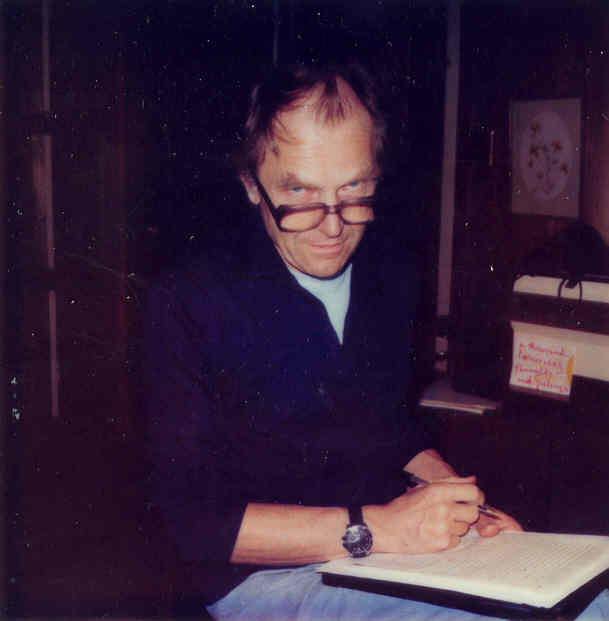 Paul Feyerabend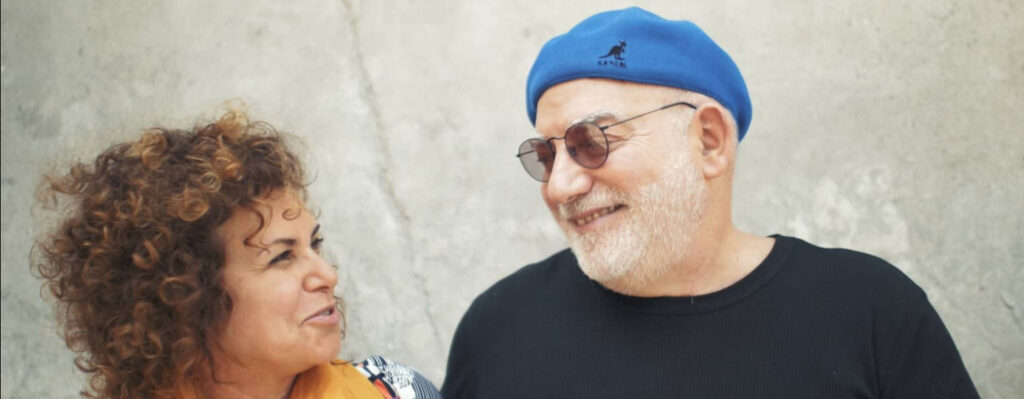
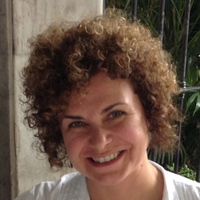 Virginia Chaitin
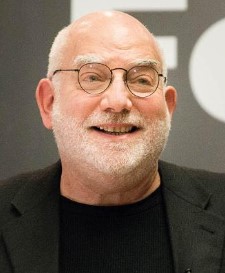 Gregory Chaitin,


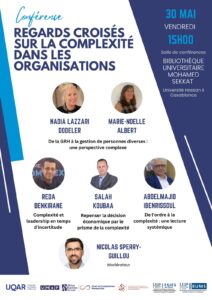 Le 30 mai dernier, la Chaire Complexités ∞ Humanités a co-organisé une conférence à la Bibliothèque Universitaire Mohammed Sekkat, en collaboration avec l’Université du Québec à Rimouski (UQAR) et l’Université Hassan II de Casablanca.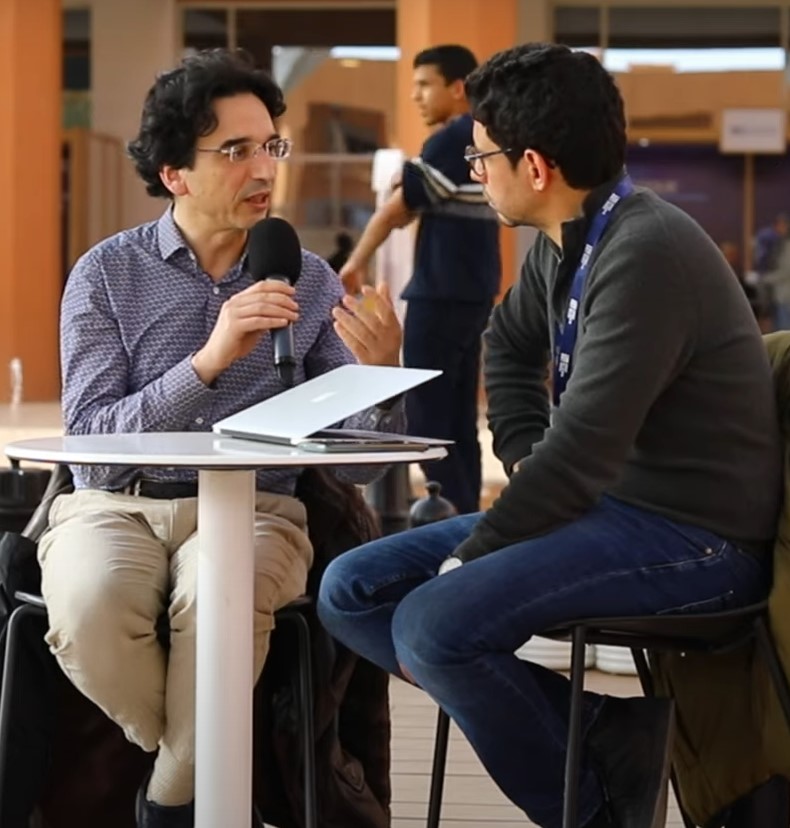
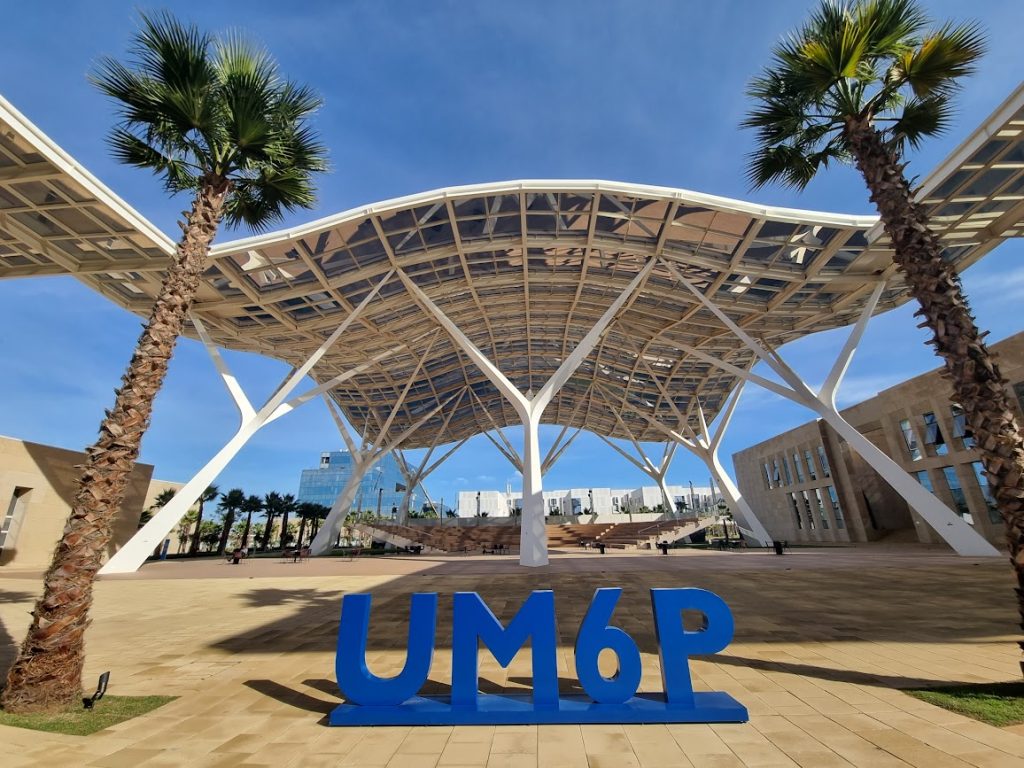
 الكرسيّ العلميّ ” تعقيدات ∞ إنسانيّات ”(CCH) يهدف إلى تعزيز الروابط بين علوم التعقيد وعلوم الإنسان والعلوم الاجتماعية، وهو مرتبط بمدرسة أفريقيا للأعمال في UM6P (التي تهدف إلى تحقيق التحول المستدام في المشهد التجاري والاقتصادي والاجتماعي في إفريقيا وما وراءها). كما يقدم الكرسي برامج تعليمية، يدير مبادرات بحثية، ينظم أحداث علمية، ينشر أبحاثًا أكاديمية، يسهل ورش عمل ويجري دراسات ميدانية.