Culture & cultures. Les chantiers de l’ethno. Sous la direction de Réda Benkirane et Erica Deuber Ziegler, avant-propos d’Edgar Morin, Gollion: Infolio éditions / Genève: Musée d’ethnographie, coll. tabou 3, 2006.
Category: Uncategorized
People
Reda Benkirane – Chair / Affiliate Full Professor

Reda Benkirane, sociologist and anthropologist, is a researcher in social sciences and an expert in international relations who has been working for UN agencies and NGOs for more than thirty years. His empirical research covers mainly urbanization, complexity, radicalism, and contemporary issues on Islam.
Read more about his bio-bibliography here.
Email: reda.benkirane[at]um6p.ma
Nicolas Sperry-Guillou – Edge Dynamics Program Director

Nick is a French-American academic manager and social science researcher. He holds an MA in Sociology of Religion, focusing his research on religious diversity in contemporary societies. He is currently pursuing a PhD with the University of Toulouse, studying the emergence of social dynamics within ecotones. Nick has a well-honed skill set in project management and instructional design and has successfully led academic programs and facilitated transformative change within organizations.
Nick leads various initiatives within the Chair, including the Edge Dynamics program and several editorial and translation projects.
Email: nicolas.sperry-guillou[at]um6p.ma
Fadoua Mhidia – Post-Doctoral Researcher

Fadoua Mhidia holds a PhD in social sciences from the International University of Rabat (UIR). She trained in Political Science through a joint programme between EGE Rabat and USJ Beirut, earned a Master’s in Development Studies from Paris 1 Panthéon-Sorbonne in 2014, and gained professional experience in national and international development cooperation before turning to academic research.
Her research examines the social, political, and epistemic effects of technical devices. Her doctoral work documented the transformations induced by two social protection policies in Morocco, the Tayssir cash transfer programme (2008-2023) and the generalisation of social coverage, analysing how econometric and algorithmic targeting reconfigures the forms of classification and government of populations.
Her postdoctoral project shifts the inquiry from the effects of technical devices to the conditions that make them possible: what imaginaries and knowledge systems does a society mobilise when it adopts a technology as its own?
Email: fadoua.mhidia[at]um6p.ma
Samia Erraji – Student Associate

Samia is a third-year student at UM6P’s Green Tech Institute pursuing a Bachelor’s degree in Industrial Operations and Digitalization. She gained practical experience through an internship at the Green Energy Park, where she focused on renewable energy and smart building projects. Additionally, she completed a digitalization project at Dolidol, where she worked on automating a real-time monitoring system for production processes.
Samia is also involved in volunteer work, particularly educational outreach through the university’s Social Experience Program. Additionally, she serves as an Innovation Entrepreneurship Lab ambassador, helping organize events and support entrepreneurial initiatives.
Email: samia.erraji[at]um6p.ma
Anthropo-logiques I: Nous autres & l’universalisme français
Réda Benkirane « La crise de l’universalisme français », Nous autres, Sous la direction d’Erica Deuber Ziegler et Geneviève Perret, Gollion: Infolio éditions / Genève: Musée d’ethnographie, collection tabou 1, 2005.
Nous autres, Sous la direction d’Erica Deuber Ziegler et Geneviève Perret
Gollion: Infolio éditions / Genève: Musée d’ethnographie, collection tabou 1, 2005.
[en libre accès depuis le site web du MEG]
Si l’utilité sociale de l’anthropologie est sans cesse rappelée par les événements contemporains, les replis identitaires, les barbaries commises au nom d’une religion ou d’une culture, la construction sociale de soi, de l’autre et de leurs relations, la production de barrières, de rapports de forces et de hiérarchies dans les sociétés et entre les sociétés, montrent qu’il y a un besoin permanent de déconstruire les stéréotypes et les croyances qui justifient et fondent les rapports entre les humains.
Reda Benkirane – ABS/UM6P
Chair of Complexities ∞ Humanities, Affiliate Full Professor, Africa Business School, UM6P.
Senior Lecturer, University of Fribourg
Research Affiliate at the Wolfram Institute
Research Associate at the Laboratoire d’Analyse des Sociétés et Pouvoirs/Afrique – Diaspora (Laspad, Gaston Berger University, Saint-Louis of Senegal)
Email: reda.benkirane[at]um6p.ma
[at] to be replaced with @
Expertise
Complexity, interdisciplinarity, scientific and digital humanities, identity, globalization, religion and politics, conflict-resolution initiatives, humanitarian issues, peace studies, intercultural and inter-religious dialog, faith-based groups, contemporary Islam, MENA & Sahel regions, radicalization, armed violence, security policies.
International Experience
Europe, MENA, Sahel
Biography
Reda Benkirane, sociologist and anthropologist, holds a Doctorate in philosophy from the University of Lyon, an Mphil in urban sociology and cultural anthropology and a Master in development studies from the Graduate Institute of International and Development Studies (Geneva). For more than 30 years, he has been working as an expert in international affairs for NGOs and UN agencies. In parallel, he has been involved in various research activities on critical social, political, cultural and scientific issues. He has participated in the creation and set-up of many international initiatives – including an NGO and a research centre.
Research areas and methodology
His multidisciplinary approach and empirical knowledge accumulated throughout his international experience constitute the basis of his current teaching and research activities.
His four main areas of research since 1988:
- Urban space, housing and poverty
- Complexity and non-linear sciences
- Radicalization and violence
- Contemporary Islam
His methodological approach:
- Heuristics of dialog (for an access to a knowledge otherwise out of reach)
- Semi-directive interviews
- Sustained attention to otherness
- Deep listening to the voiceless
- Participant observation
Complete CV and Bibliography
Main Publications
Books / Books edited / Contributed chapters / Reports to the United Nations / Research notebooks
_________________________________
Main Publications
Books
 Réda Benkirane, Islam, à la reconquête du sens. Paris, Le Pommier, 512 pages, 2017. Réda Benkirane, Islam, à la reconquête du sens. Paris, Le Pommier, 512 pages, 2017.Nouvelle édition, Casablanca, La Croisée des Chemins, 544 pages, 2021. |
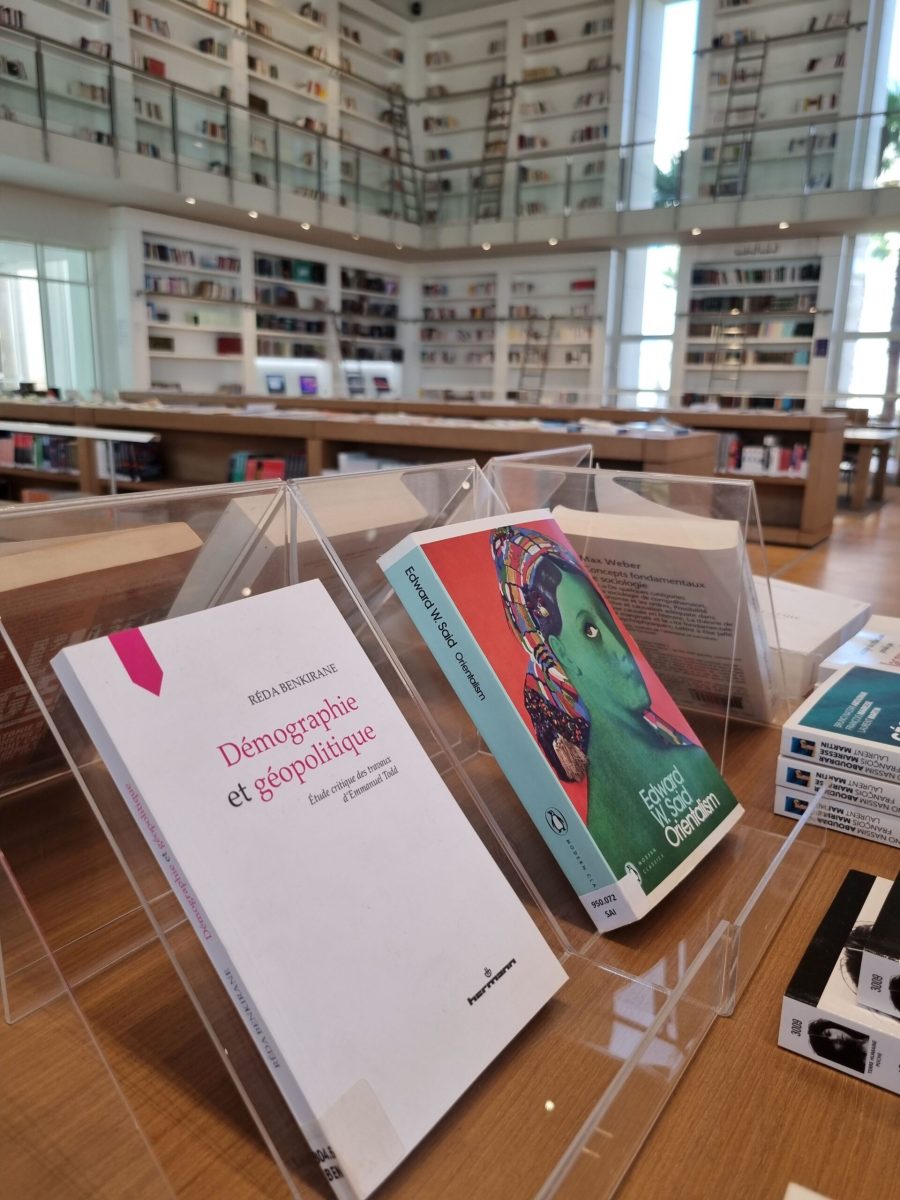
 Réda Benkirane, Démographie et géopolitique. Etude critique des travaux d’Emmanuel Todd, Paris, éditions Hermann, 2015, 148 pages. Réda Benkirane, Démographie et géopolitique. Etude critique des travaux d’Emmanuel Todd, Paris, éditions Hermann, 2015, 148 pages. |
|
Réda Benkirane, La Complexité, vertiges et promesses. Dix-huit histoires de sciences. Paris, Le Pommier, 408 pages, 2013, 2006. 2002. Traduit en italien et portugais. |
Réda Benkirane, Le désarroi identitaire. Jeunesse, islamité et arabité contemporaines. Préface de Salah Stétié, Paris, Editions du Cerf, 352 pages, 2004. Reparu aux Editions La Croisée des Chemins, Casablanca, 2012 |

Books Edited
|
Religion et État. Logiques de la sécularisation et de la citoyenneté,
co-edited with RiccardoBocco and Catherine Germond, Dossier Maghreb-Machrek, No 224-225, Paris, Editions Skira,06/2016.
|
Culture & cultures. Les chantiers de l’ethno. Sous la direction de Réda Benkirane et Erica Deuber Ziegler, avant-propos d’Edgar Morin, Gollion: Infolio éditions / Genève: Musée d’ethnographie, coll. tabou 3, 2006. |
|
Jacques Berque. Quel Islam? Avant-propos et postface de Réda Benkirane, Sindbad – Actes Sud, Paris, 2003. Traduit en arabe. |
|



Contributed Chapters
|
Contributions on Nagarjuna and Ibn Tufayl
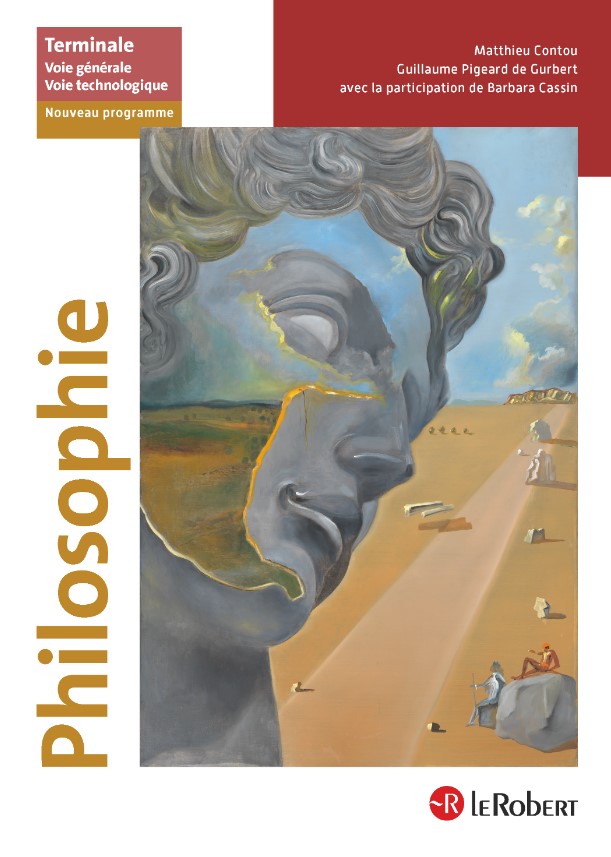
Manuel philosophie terminale, edited by Matthieu Contou and Guillaume Pigeard de Gurbert, with the participation of Barbara Cassin, éditions Le Robert, 2020. |

« Quelle démocratie dans le monde arabo-musulman? »,
La démocratisation dans le monde arabe : alternance pour quelle alternative ?
sous la direction de Rahim Kherad etDominique Maillard Desgrées du Loû,
Paris, Editions Les points sur les i, 2015.
|
 « La complexité, grille de lecture du monde contemporain », Campagne-ville : Le pas de deux. Enjeux et opportunités des recompositions territoriales. « La complexité, grille de lecture du monde contemporain », Campagne-ville : Le pas de deux. Enjeux et opportunités des recompositions territoriales. Sous la direction de Lilli Monteventi Weber, Chantal Deschenaux, Michèle Tranda-Pittion, Communauté d’études pour l’aménagement du territoire (CEAT), EPFL, Presses polytechniques et universitaires romandes, Lausanne, 2008.
|
 « La crise de l’universalisme français », Nous autres, Sous la direction d’Erica Deuber Ziegler et Geneviève Perret, Gollion: Infolio éditions / Genève: Musée d’ethnographie, coll.tabou 1, 2005.
|
Reports to the United Nations
 Meta-Synthesis under the UN Global Counter-Terrorism Strategy, United Nations, October 2021. Independent synthesis report prepared by Punit Arora, Reda Benkirane and Xiomara Chavez. Meta-Synthesis under the UN Global Counter-Terrorism Strategy, United Nations, October 2021. Independent synthesis report prepared by Punit Arora, Reda Benkirane and Xiomara Chavez. |
 What 800 Sahelians have to say. Perception study on the drivers of insecurity and violent extremism in the border regions of the Sahel, under the direction of Reda Benkirane, The Centre for Humanitarian Dialogue/UNDP, 2016. What 800 Sahelians have to say. Perception study on the drivers of insecurity and violent extremism in the border regions of the Sahel, under the direction of Reda Benkirane, The Centre for Humanitarian Dialogue/UNDP, 2016. |
Research Notebooks

http://sahelradical.hypotheses.org

Luc Steels, Promises and limitations of Contemporary AI
UM6P Science Week, 21 February 2023, 52mn
Introductory texts (English, French and Arabic) by Hind Aboulazm
Drawing by Sophie Lenormand
Luc Steels is a linguist by training and one of the main thinkers on artificial intelligence and robotics. He offers alternative paradigms to artificial intelligence, addressing issues about body model, language, origins of language, origins of symbols, evolution, cooperation, and about how a mind could grow in artificial agents.
AI systems are being utilized to tackle complex problems through (deep) reinforcement learning. However, their limitations are becoming evident, particularly in areas like perception, where sensitivity to specific features can make them fragile. For instance, AI systems struggle to generalize when faced with different lighting conditions in image recognition tasks.
Recently, the big talk about conversational interfaces has gained significant attention, with systems like Google Lambda and OpenAI’s GPT, valued at billions of dollars. However, there are concerns about the accuracy and trustworthiness of the generated content. Misinformation and errors in texts produced by conversational AI pose risks to the information ecosystem.
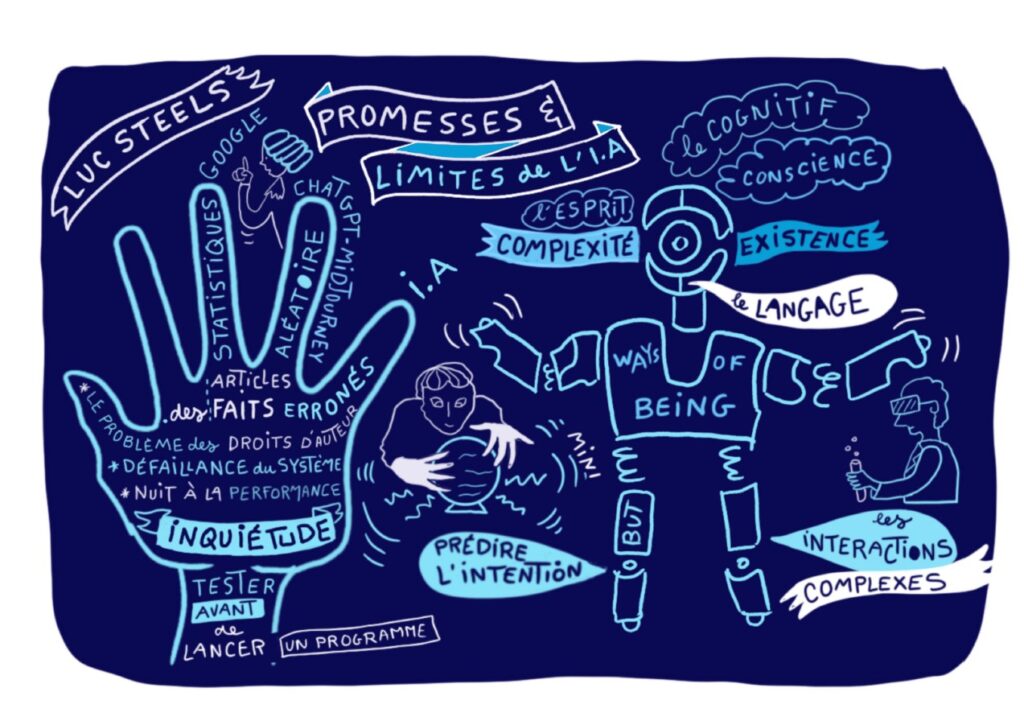 Another issue lies in the use of AI to generate new content, such as images and code. Copyright and accuracy problems arise when AI utilizes existing works to create new ones. The inherent flaws in AI technology make it challenging to ensure the correctness and reliability of generated content.
Luc Steels advocates for combining a knowledge-based approach with data-driven AI to address the complexity of real-world problems. He emphasizes the importance of considering fundamental problems before releasing AI technologies.
In his work, Steels draws from the perspective of complexity, tracing its roots in AI research since the 1950s. He explores the idea of “scala naturae” which focuses on intentional stances and how entities possess self-recognition, subjective experience, and awareness.
Steels conducts numerous experiments to understand how complexity emerges in artificial systems. By studying the interactions between multiple autonomous robots and their emergent behaviors, he gains insights into cognition and mental capabilities. This complex systems approach helps shed light on open problems in neuroscience, such as the origins of color categories and self-awareness in robots.
In conclusion, Luc Steels is a pioneering linguist and AI researcher who seeks alternative paradigms for artificial intelligence.His work emphasizes the need to address fundamental problems and complexities in AI technologies to ensure their responsible and effective use in real-world applications.
Hind Aboulazm
Luc Steels, scientist and artist born in 1952, pioneer of artificial intelligence in Europe, is known for his works on expert systems, behavioral robotics, artificial life and linguistics. Member of ICREA in Barcelona, he was the founding director of the IA Laboratory of VUB and the Sony Computer Science Laboratory in Paris.
Luc Steels a edited many books including The Artificial Life Route to Artificial Intelligence. Building Situated Embodied Agents (with Rodney Brooks, New Haven, Lawrence Erlbaum Associates, 1993), The Biology and Technology of Intelligent Autonomous Agents (Berlin, Springer-Verlag, 1995) and Cooperative Robots : A Case Study in Animal Robotics (avec D. McFarland, Cambridge, Ma, MIT Press, 1997).
Source: https://fr.wikipedia.org/wiki/Luc_Steels
_________________________________
Luc Steels est un linguiste et l’un des principaux penseurs en intelligence artificielle et en robotique. Son travail se concentre sur le développement de paradigmes alternatifs pour l’intelligence artificielle, abordant des questions telles que le modèle corporel, le langage, les origines du langage, les symboles, l’évolution, la coopération et le développement de l’esprit chez les agents artificiels.
Il souligne les limites de l’intelligence artificielle actuelle, notamment dans le domaine de la perception et de la fragilité des systèmes face à la généralisation des caractéristiques. Les interfaces conversationnelles suscitent également des inquiétudes concernant la fiabilité et l’exactitude du contenu généré.
Steels préconise une approche combinant l’intelligence artificielle basée sur la connaissance et celle axée sur les données pour relever les défis complexes du monde réel. Il s’appuie sur la perspective de la complexité, explorant les positions intentionnelles et la conscience chez les entités.
Ses expériences sur les systèmes complexes et les comportements émergents des robots autonomes enrichissent notre compréhension de la cognition et des capacités mentales. Elles ouvrent de nouvelles perspectives en neurosciences, notamment sur les origines des catégories de couleurs et la conscience de soi chez les robots.
En résumé, Luc Steels est un pionnier en linguistique et intelligence artificielle, dont les recherches contribuent à repenser les approches de l’IA et à promouvoir une utilisation responsable et efficace des technologies dans le monde réel.
HA
Luc Steels, scientifique et artiste belge né en 1952, pionnier de l’intelligence artificielle en Europe, est connu pour ses travaux sur les systèmes experts, la robotique comportementale, la vie artificielle et la linguistique computationnelle évolutive. Membre de l’ICREA à Barcelone, il a été directeur fondateur du Laboratoire d’IA de la VUB et du Sony Computer Science Laboratory à Paris.
Luc Steels a dirigé de nombreux ouvrages dont la publication de The Artificial Life Route to Artificial Intelligence. Building Situated Embodied Agents (avec Rodney Brooks, New Haven, Lawrence Erlbaum Associates, 1993), The Biology and Technology of Intelligent Autonomous Agents (Berlin, Springer-Verlag, 1995) et Cooperative Robots : A Case Study in Animal Robotics (avec D. McFarland, Cambridge, Ma, MIT Press, 1997).
Source: https://fr.wikipedia.org/wiki/Luc_Steels
_________________________________
لوك ستيلز، وعود وحدود الذكاء الاصطناعي المعاصر
لوك ستيلز هو عالِم لغوي مُدرَب، وأحد الفلاسفة الرئيسيين في مجال الذكاء الاصطناعي والروبوتات، ويعمل على استكشاف النماذج البديلة للذكاء الاصطناعي. يتناول مسائل متعددة تتعلق بنموذج الجسد، واللغة، وأصول اللغة، وأصول الرموز، والتطور، والتعاون، وكيف يمكن للعقل أن يتطور في الوكلاء الاصطناعي.
تُستخدم أنظمة الذكاء الاصطناعي للتعامل مع المشكلات المعقدة من خلال التعلم التعزيزي وتعلم التعزيز العميق. ومع ذلك، يصبح ظهور قيودها واضحًا، خاصة في المجالات مثل التصوّر، حيث يمكن أن تجعلها حساسة للميزات النوعية عُرضةً للتكسّر. على سبيل المثال، تواجه أنظمة الذكاء الاصطناعي صعوبة في التعميم عند مواجهة ظروف إضاءة مختلفة في مهام التعرف على الصور.
في الآونة الأخيرة، أصبحت واجهات المحادثة موضوعًا للحديث الكبير، حيث حصلت نظم مثل جوجل لا مبدا ونظام GPT من OpenAI على قيمة تُقدر بمليارات الدولارات. ومع ذلك، هناك مخاوف بشأن دقة وموثوقية المحتوى الذي يتم إنشاؤه. يشكل نشر المعلومات الخاطئة والأخطاء في النصوص التي ينتجها الذكاء الاصطناعي المحادث أخطارًا على نظام المعلومات.
مشكلة أخرى تتمثل في استخدام الذكاء الاصطناعي لإنشاء محتوى جديد، مثل الصور والشيفرة. تنشأ مشاكل في حقوق النشر والدقة عندما يستخدم الذكاء الاصطناعي الأعمال الموجودة لإنشاء أعمال جديدة. تجعل العيوب الكامنة في تكنولوجيا الذكاء الاصطناعي من الصعب ضمان صحة وموثوقية المحتوى الذي يتم إنشاؤه.
يدعم لوك ستيلز نهجًا يجمع بين النهج القائم على المعرفة مع الذكاء الاصطناعي القائم على البيانات لمعالجة تعقيد المشكلات في العالم الحقيقي. ويؤكد على أهمية النظر في المشكلات الأساسية قبل إطلاق تقنيات الذكاء الاصطناعي.
في أعماله، يستفيد ستيلز من منظور التعقيد، متتبعًا جذوره في البحث في مجال الذكاء الاصطناعي منذ الخمسينيات. ويستكشف فكرة “سكالا ناتوري”، التي تركز على المواقف المتعمدة وكيفية أن الكيانات تمتلك التعرف على الذات والتجربة الذاتية والوعي.
يجري ستيلز العديد من التجارب لفهم كيفية ظهور التعقيد في الأنظمة الاصطناعية. من خلال دراسة التفاعلات بين الروبوتات المتمردة المتعددة وسلوكياتها الظاهرة، يكتسب أفكارًا حول الإدراك والقدرات الذهنية. يساعد هذا النهج للأنظمة المعقدة على إلقاء الضوء على المشكلات المفتوحة في علم الأعصاب، مثل أصول فئات الألوان والوعي في الروبوتات
في الختام، يعد لوك ستيلز عالمًا رائدًا في مجال اللغويات والبحث في الذكاء الاصطناعي الذي يسعى إلى النماذج البديلة للذكاء الاصطناعي. من خلال التجارب في نظم المعقدة ودراسة السلوكيات الظاهرة، يهدف إلى فهم الإدراك ونمو العقل في الوكلاء الاصطناعية. عمله يؤكد على ضرورة التعامل مع المشكلات الأساسية والتعقيدات في تقنيات الذكاء الاصطناعي لضمان استخدامها بمسؤولية وفاعلية في التطبيقات الحقيقية.
هند ابوالعزم
لوك ستيلز، العالِم والفنان البلجيكي وُلِدَ عام 1952، وهو رائد في مجال الذكاء الصناعي في أوروبا، ومشهور بأعماله في مجال النظم الخبيرة والروبوتيات السلوكية والحياة الاصطناعية. يعمل كعضو في ICREA في برشلونة، وكان مديرًا مؤسسًا لمختبر الذكاء الاصطناعي في VUB ومختبر علوم الحاسوب في سوني باريس.
أشرف لوك ستيلز على العديد من الأعمال، منها نشر “مسار الحياة الاصطناعية نحو الذكاء الاصطناعي. بناء عوامل ذاتية موجودة في سياقها” (بالتعاون مع رودني بروكس، نيو هيفن، لورنس إرلبوم أسوشييتس، 1993)، “علم وتكنولوجيا الوكلاء الذكية الذاتية” (برلين، سبرينغر فيرلاغ، 1995)، و”الروبوتات التعاونية: دراسة حالة في روبوتات الحيوانات” (بالتعاون مع د. ماكفارلاند، كامبريدج، ماساشوستس، معهد ماساتشوستس للتكنولوجيا، 1997).
The Semantic Sphere by Pierre Lévy
Book review / online consultation
Pierre Lévy, The Semantic Sphere 1: Computation, Cognition and Information Economy, Wileys, 2011.
Treatise on Semantics
Principles of the Semantic Sphere
 According to its internal principle, the semantic sphere is Leibnizian, that is to say perspectivist and monadological (Monadology, § 56).
- According to its external principle, the semantic sphere is Deleuzian, that is to say, in constant reterritorialization, rhizomatic. Fractal aggregation.
- From the point of view of its verticality, the semantic sphere is Avicennian: active intellect, an angelic cloud of signs which is the sum of the in(di)visible monads.
- From the point of view of its horizontality, the semantic sphere is Teilhardian: emerging noosphere, swarm intelligence. Collective property.
- In its active principle, the semantic sphere produces the meaning of meaning through calculation: its reason is algorithmic.
- In its passive principle, the semantic sphere proceeds from cognitive automation. A machinery scans the landscape of signs to territorialize mental landscapes, signposting them as thought signals.
- The spherical form refers to the thinking and communicating membrane of humanity that covers the Earth with cables, fibers, antennas, and intervening satellites. Envelopment.
- The semantic dimension is here restored to its original meaning of “signal technique”: a new symbolism is subsequently invented and transfigured into a computational signaling system. Meaning and power.
- The semantic sphere is the evolutionary and emergent culmination of flashes occurring every microsecond within the Web membrane: these flashes are ideas infinitized by ubiquitous communication.
- The semantic sphere embraces all the creative conversations buzzing within the Membrane; it organizes the details and motifs, ramifies series and sequences of signs so that the Complexity of meaning emerges.
- The semantic sphere reveals the different scales of complexity of the thinking and communicating humanity: it refers to a meta-level, that is, a transcultural, transdisciplinary epistemology. Hypercomplexity both unifies and differentiates humanities within Humanity.
- The semantic sphere is the main regime of meaning production of a collective, connective, cognitive intelligence. Meta-human understanding of what humans can signify on the info-techno-logical level.
- This collective, connective, and cognitive intelligence escapes all control, all power, all authority by the massively parallel power of the Great Spirit of Humanity.
- The information philosophy of the semantic sphere verifies the (meta)physical postulate of the (B)it, ‘It from Bit’, that is to say, that all of “that” derives from a thread or a snippet of information.
- The semantic sphere is not a library, a stock, a reservoir; it is Flow.
- The semantic sphere, an infinite conversation of billions of individuals, expresses, according to a new technology and a different theology of writing, the humanity of Humanity.
Reda Benkirane
Pierre Lévy, The Semantic Sphere 1: Computation, Cognition and Information Economy, Wileys, 2011.
[in free access from the author’s website]
A propos de Pierre Lévy, La sphère sémantique – Tome 1, Computation, cognition, économie de l’information, Hermès, 2011.
Revue de livre / Consultation en ligne
Traité de Sémantologie
Principes de la Sphère sémantique
- Sel
 on son principe interne, la sphère sémantique est leibnizienne, c’est-à-dire perspectiviste et monadologique (Monadologie, § 56).
 - Selon son principe externe, la sphère sémantique est deleuzienne, c’est-à-dire en reterritorialisation permanente, rhizomatique. Agrégation fractale.
- Du point de vue de sa verticalité, la sphère sémantique est avicennienne: intellect agent, nuée angélique de signes qui est somme des uns in(di)visibles.
- Du point de vue de son horizontalité, la sphère sémantique est teilhardienne: noosphère en émergence, intelligence en essaim. Propriété collective.
- Dans son principe actif, la sphère sémantique produit le sens du sens par calcul : sa raison est algorithmique.
- Dans son principe passif, la sphère sémantique procède d’une automation cognitive. Une machinerie parcourt le paysage des signes pour territorialiser des paysages mentaux, les baliser en signaux de pensée.
- La forme sphérique renvoie à la membrane pensante et communicante de l’humanité qui recouvre le globe terrestre par câble, fibre, antenne, satellite interposés. Enveloppement.
- La dimension sémantique est ici rendue à son sens originaire de « technique des signaux » : s’invente dans la lancée un symbolisme nouveau transfiguré en une signalétique calculatoire. Sens et puissance.
- La sphère sémantique est l’aboutissement évolutif et émergentiste de fulgurations se produisant à chaque microseconde au sein de la membrane Web: ces fulgurations sont des idées infinitisées par la communication ubiquitaire.
- La sphère sémantique embrasse l’ensemble des conversations créatrices bruissant au sein de la Membrane; elle ordonne les détails et motifs, ramifie séries et suites de signes pour qu’émerge la Complexité du sens.
- La sphère sémantique donne à voir les différentes échelles de complexité de l’humanité pensante et communicante: elle renvoie à un métaniveau, c’est-à-dire une épistémologie transculturelle, transdisciplinaire. L’hypercomplexité à la fois unifie et différentialise les humanités dans l’Humanité.
- La sphère sémantique est le principal régime de production de sens d’une intelligence collective, connective, cognitive. Entendement méta-humain de ce que l’humain peut signifier sur le plan info-techno-logique.
- Cette intelligence collective, connective et cognitive échappe à tout contrôle, tout pouvoir, toute autorité par la puissance massivement parallèle du Grand Esprit de l’Humanité.
- La philosophie de l’information de la sphère sémantique vérifie le postulat (méta)physique du (B)it, ‘It from Bit’, c’est-à.-dire que tout « ça » dérive d’un fil ou d’une bribe d’information.
- La sphère sémantique n’est pas une bibliothèque, un stock, un réservoir; elle est Flux.
- La sphère sémantique, conversation infinie de milliards d’individus, exprime, selon une nouvelle technologie et une autre théologie de l’écriture, l’humanité de l’Humanité.
Réda Benkirane
Pierre Lévy, La sphère sémantique – Tome 1, Computation, cognition, économie de l’information, Hermès, 2011.
[en libre accès depuis le site web de l’auteur]
Complexity – Annotated Bibliography
 From Réda Benkirane, La Complexité, vertiges et promesses. Histoires de sciences. Nouvelle édition, Benguerir, UM6P-Press, 2023, p. 373-389 (translated by Nicolas Sperry-Guillou).
Ameisen, Jean-Claude, La Sculpture du vivant. Le suicide cellulaire ou la mort créatrice. Paris: Seuil, 1999.
Apoptosis, or the cell’s song of death. A fresco of life that exists only on the edge of death. A philosophical reflection on the complexity and rituals of death in biology, particularly within the immune system. Death captivates through its dynamic of creative destruction.
Atlan, Henri. The Sparks of Randomness, Volume 1: Spermatic Knowledge. Stanford University Press, 2011 (Original work published 1999).
An insight into the engineering of life through the Talmud and Kabbalah mythologies. The book aims to provide answers to the question of a “genethics” produced by the intersection of two traditional forms of knowledge.
Bak, Per. How Nature Works: The Science of Self-Organized Criticality. New York: Copernicus, 1996.
A rather specialized approach to the sciences of complexity, in which the Danish physicist presents his famous sandpile model and his concept of “self-organized criticality.”
Barrow, John D. Pi in the Sky: Counting, Thinking and Being. New York: Oxford University Press, 1992.
This authentic anthropology and history of numbers, along with a philosophy of mathematics, serves as a work of reference. It offers a masterful overview of the great enigmas that have shaped the course of mathematics up to the present day.
Barrow, John D. The Origin of the Universe. New York: Basic Books, 1994.
A book intended for a somewhat knowledgeable readership, showcasing different cosmologies regarding the form, finitude, and expansion of the universe.
Barrow, John D. Theories of Everything: The Quest for Ultimate Explanation. Oxford: Oxford University Press, 1991.
An astonishing journey through theoretical physics, in which the author excels in a comparative study of contemporary physical theories and medieval theologies.
Barrow, John D. Impossibility: The Limits of Science and the Science of Limits. New York: Oxford University Press, 1998.
The title is not misleading: the book addresses all the questions, those we don’t know and those we can never know… The author explores the most typical problems of complexity, as well as those that fall within the finite limits of knowledge and, as a result, will remain definitively beyond the reach of all scientific research.
Barrow, John D., Between Inner Space and Outer Space, New York, Oxford University Press, 1999.
A book that gathers popular science articles in which Barrow explores the various facets and enigmas of contemporary science.
Barrow, John D. The Book of Nothing. London: Random House, 2000.
A comprehensive study of the approach to emptiness and the world of nothing in the history of science, from antiquity to the present day. However, it lacks a key reference; the omission of the Indian thinker Nagarjuna and his concept of emptiness, in retrospect, undermines the essay.
Bergé, Pierre, Pomeau Yves et Dubois-Gance Monique, Des rythmes au chaos. Paris: Odile Jacob, coll. Opus, 1994.
Everything you need to know about deterministic chaos, enhanced with numerous graphics and, importantly, a commendable effort to place it in historical and cultural perspective.
Bersini, Hugues, Des réseaux et des sciences. Paris: Vuibert, 2005.
Bersini, Hugues, Qu’est-ce que l’émergence ? Paris: Ellipses, 2007.
Two instructional books that present non-linear sciences, detailing their properties and the processes and experiments that led to their discovery.
Bonabeau, Eric; Dorigo, Marco; Theraulaz, Guy, “Self-organization in social insects”, Trends in Ecology & Evolution, 1997, vol. 12, no 5, p. 188–193.
The article has the advantage of presenting emergent phenomena through the intelligible case of social insects.
Bonabeau, Éric, and Theraulaz, Guy. “Swarm Smarts.” Scientific American, March 2000.
This article demonstrates how modeling the collective behavior of ants can be applied to solve problems across various fields, from telecommunication networks to combinatorial computation, exemplified by the famous traveling salesman problem.
Brockman, John. The Third Culture. New York: Simon & Schuster, 1995.
The book showcases various scientific minds, primarily from the American intellectual sphere. Our major survey owes a great deal to this book, particularly during its pre-project phase and in the pre-selection of our own panel of scientists.
Capra, Fritjof. The Web of Life: A New Scientific Understanding of Living Systems. New York: Anchor Books, 1996.
An account of non-linear science by a scientist renowned for his intellectual acuity, as well as his social and environmental activism.
Casti, John L. Mathematical Mountaintops: The Five Most Famous Problems of All Time. New York: Oxford University Press, 2001.
This high-level review of Hilbert’s Tenth Problem, the Four-Color Conjecture, the Continuum Hypothesis, Kepler’s Conjecture, and Fermat’s Last Theorem targets those interested in the history of science. The author, a member of the Santa Fe Institute, traces the development of each of these mathematical problems from their earliest formulations to their more or less formal resolutions. The role of computers in the development of mathematical proofs is thoroughly discussed.
Cazenave, Michel (ed.), At the Frontiers of Science: Dictionary of Ignorance, New York: Prometheus Books, 2000 (Original work published 1998).
Some contributions to this collective work are quite interesting, but the book’s title is misleading. The book is not a dictionary; it focuses more on what we know than on what we don’t know. Although the panorama of the known and the knowable is certainly profound, little is said about the spaces of “ignorance” and the unknowable.
Chaitin, Gregory, “The Randomness in Numbers”, New Scientist, vol. 129, no. 1759, 16 February 1991, pp. 44-46.
Chaitin, Gregory, “Undecidability & Randomness in Pure Mathematics”, International Journal of Bifurcation and Chaos, n° 4, 1994, p. 3-15.
Chaitin, Gregory. The Unknowable. IBM Research Division, T.J. Watson Research Center, Hawthorne, New York, 11 February 1999.
Chaitin, Gregory, Conversations with a Mathematician, London, Springer- Verlag, 2002.
Chaitin, Gregory, Meta Math! The Quest for Omega. New York: Pantheon Books, 2005.
Chaitin, Gregory, Proving Darwin: Making Biology Mathematical, New York, Vintage, 2012.
Articles, books, and book excerpts are available on the Internet from the author’s personal page: https://uba.academia.edu/GregoryChaitin
Chaitin, G.J. Randomness in Arithmetic and the Decline and Fall of Reductionism in Pure Mathematics. Yorktown Heights: IBM Thomas J. Watson Research Division, 1992, 21 p.
Changeux, Jean-Pierre; Connes, Alain. Conversations on Mind, Matter, and Mathematics. New Jersey: Princeton University Press, 1995 (Original work published 1989)
An unusual yet highly instructive debate between two scientific figures. As a reductionist attempt to persuade a Platonist of the vacuity of his point of view, it leads to several persistent differences… Epistemological divergences to ponder as an original example of the virtues—and limits—of multidisciplinarity.
Chuang, Isaac L. & Gershenfeld, Neil, “Quantum Computing with Molecules”, Scientific American, vol. 278, no. 6, June 1998, pp. 66-71.
An article for the general public discussing the operational principles of quantum computers, authored by its two original designers.
Connes, Alain, Lichnerowicz André et Schützenberger Marcel Paul, Triangle de pensées. Paris: Odile Jacob, 2000.
A book of interviews that is challenging, particularly in its second part, which focuses on quantum physics and is intended for specialists. However, the first part is recommended for its discussion of logic and for presenting the viewpoints of “Platonic” and “formalist” mathematicians.
Coveney, Peter; Highfield, Roger. Frontiers of Complexity: The Search for Order in a Chaotic World. New York: Fawcett Columbine, 1995.
A book that was very useful during the documentation phase of our work, featuring many examples to recommend. The density of information makes it ideal for a more in-depth exploration of complexity sciences.
Davies, Paul. About Time: Einstein’s Unfinished Revolution. London: Viking, 1995.
This book presents challenging and profound experiments in an accessible manner, highlighting, in particular, the extent of their consequences and paradoxes in the contemporary history of physics. The author, a physicist and science writer, elaborates on the astonishing prospects of Einstein’s relativity and the metaphysical vertigo introduced by the concept of time.
Dawkins, Richard. The Selfish Gene. Oxford: Oxford University Press, 1976.
A bestseller that is somewhat dated; this book aimed to be a “revolution” in natural evolution. It reflects a particular ideology of science, that of Darwinism applied to the “all-genetic” grid, which, according to the author, represents the deterministic primacy of biological evolution.
Dehaene, Stanislas, “How the Brain Computes?”, Scientific American, vol. 276, no. 6, June 1997, pp. 64-69.
An article describing various neurobiological and cognitive psychology experiments on the networked functions of different brain areas involved in number recognition or calculation. The author is well known for his work demonstrating the embodied nature of mathematics, showing that it is a language used by humans and even by animals.
Delahaye, Jean-Paul, Information, Complexity, and Randomness, New York: Springer-Verlag, 1998 (Original work published 1997).
The author offers a brilliant review of various theories related to information and complexity. Numerous computational problems and computational limits posed by complexity and randomness in arithmetic are discussed in detail. We also recommend his numerous articles on the same topics published in the French edition of Scientific American.
Delahaye, Jean-Paul, Complexité aléatoire et complexité organisée, Versailles: Éditions Quae, 2009.
The author examines the various expressions and manifestations of complexity, requiring us to consider, first and foremost, their multiplicity and variety.
Dupuy, Jean-Pierre. On the Origins of Cognitive Science: The Mechanization of the Mind. New Jersey: Princeton University Press, 2000; reissued by MIT Press, 2009 (Original work published 1994).
An essay exploring the history of cybernetics, which was fundamental to the development of artificial intelligence and neurobiology, among other domains. The book focuses in particular on the Macy Conferences, the multidisciplinary gatherings that began in the mid-1940s and that, in the author’s view, due to their creativity and insights, deserve reflection in the current context of cognitive sciences.
Ekeland, Ivar, The Broken Dice, and Other Mathematical Tales of Chance, Chicago: University of Chicago Press, 1993 (Original work published 1991).
An exploration of chance that offers dual insights into chaos mathematics and the culture of Norwegian kings. This text is accessible to a broad audience.
Ekeland, Ivar, Le Chaos. Paris: Flammarion, coll. Dominos, 1995.
A brief introduction to chaos, featuring numerous original illustrated examples.
Ekeland, Ivar, “Writing in Mathematics”, SubStance, vol. 28, no. 3 (Issue 90), 1999, pp. 23-37.
An article illustrating how and why we are witnessing a generalization of the practice of mathematics beyond scholarly and academic spheres.
Ekeland, Ivar. Le Syndrome de la grenouille : L’économie et le climat. Paris: Odile Jacob, 2015.
The author’s latest publications focus on the climate crisis and aim to raise awareness about it, which is evident in both this book and an awareness course available to all students at Paris Dauphine University.
Farouki, Nayla, La Foi et la Raison. Histoire d’un malentendu. Paris; Flammarion, 1996.
Farouki, Nayla, Qu’est-ce qu’une idée ? Paris; Le Pommier, 1999.
The appeal of these two books lies in their educational approach to the philosophy of science and the history of ideas.
Gallagher, Richard; Appenzeller, Tim. “Beyond Reductionism”, Science, 1999, vol. 284, n° 5411, p. 79.
An editorial in the highly respected American journal Science, introducing a dossier devoted to complex systems.
Gershenfeld, Neil. When Things Start to Think. New York: Henry Holt and Company, 1998.
A pleasant, easy-to-read book by the co-discoverer of the quantum computer. The author articulates what all users of information technology already think. One criticism, however, is that the book has an almost advertising tone in its mention of “market-oriented research” as practiced at MIT’s Media Lab. It is also worthwhile to visit Gershenfeld’s personal web page (https://ng.cba.mit.edu), which provides more details about the research he directs.
Gleick, James. Chaos: Making a New Science. New York: Viking Penguin, 1987.
The bestseller by the New York Times science journalist has greatly contributed to publicizing chaos theory and, more specifically, the metaphor of a butterfly flapping its wings. The book was published quite a while ago, and the fields it discusses have developed significantly since then.
Gisin, Nicolas. Quantum Chance: Nonlocality, Teleportation, and Other Quantum Marvels. Cham: Springer, 2014 (Original work published 2012).
A bold and thorough book that explores quantum physics through various experimental devices. The author confidently asserts that nature is non-local—a stunning attribute of physical reality.
Goldenfeld, Nigel; Kadanoff, Leo P. “Simple Lessons from Complexity”, Science, 1999, vol. 284, n° 5411, p. 87–89.
A synthetic article included in Science’s 1999 special dossier on complexity.
Goodwin, Brian. How the Leopard Changed Its Spots: The Evolution of Complexity. New York: Simon & Schuster, 1994.
A genuinely philosophical vision of biology. Challenging to read initially, yet abundant in examples and lessons. Targeted at an engaged audience.
Goodwin, Brian, “All for one… One for all”, New Scientist, 13 June 1998.
Goodwin, Brian, “From Control to Participation Via a Science of Qualities”, ReVision, 1999.
Two articles that convey the author’s critical spirit and creative vision, who proposes through his various writings nothing less than a refoundation of science based on a more qualitative rather than a quantitative framework.
Goodwin, Brian; Solé, Ricard. Signs of Life: How Complexity Pervades Biology. New York: Basic Books, 2001.
A multi-disciplinary, multi-level book in which Brian Goodwin, in collaboration with one of his former students, introduces the study of complexity in biology through a broad array of examples from various fields. The book includes numerous addenda for scientific readers who wish to delve deeper into the experiments discussed.
Greene, Brian, The Elegant Universe: Superstrings, Hidden Dimensions, and the Quest for the Ultimate Theory. New York: W.W. Norton & Company, 1999.
A superb descriptive essay about the cutting-edge physics of strings as the ultimate constituents of matter. In an astonishingly clear and vivid style, the author explains one of the most challenging theories that the scientific mind must grasp today.
Gribbin, John, A Brief History of Science. Weidenfeld Nicolson Illustrated, 1998.
A richly illustrated book with numerous examples, boxes, and addenda. It is recommended as an initial approach to the history of science.
Gribbin, John, Deep Simplicity: Bringing Order to Chaos and Complexity. New York: Random House, 2004.
A well-crafted book that presents the various facets of complexity sciences.
Guillen, Michael, Bridges to Infinity: The Human Side of Mathematics. New York: TarcherPerigee, 1983.
A clear and instructive overview of the significant mathematical issues, ranging from Gödel’s theorem to combinatorics, Cantor’s infinity sequences, and game theory. Aimed at a general audience.
Hofstadter, Douglas, Gödel, Escher, Bach: An Eternal Golden Brand. New York, Basic Books, 1979
Published in 1979, this highly successful book coincided with the rise of artificial intelligence. It combines Escher’s lithographs with reflections on the mathematics of self-reference and logical formalism. Various narrative forms explore emergent phenomena at work in art, mathematics, and biology.
Holton, Gerald, The Scientific Imagination: Case Studies. Cambridge: Cambridge University Press, 1978.
A classic in the history of science, where the author identifies key conceptions at certain stages of scientific thought, which he calls thêmata. These thêmata influence and govern scientists at different levels, helping to bring about the emergence of “fundamental moments” in science, and they tend to demonstrate that science is a “total cultural fact.”
Horgan, John, The End of Science. Facing the Limits of Knowledge in the Twilight of the Scientific Age. Reading, Mass., Addison-Wesley, 1996.
A bestseller, this book sparked controversy upon its release in the United States. A must-read not only for its thesis but also for its engaging style, which is grounded in impressive fieldwork, and its often satirically impertinent portrayals of some of science’s mandarins.
Horgan, John, “The End of Science? There’s Nothing Left to Discover!”, Scientific American, 1996.
An article summarizing Horgan’s thesis on the “end of science.”
Kaku, Michio. Visions: How Science Will Revolutionize the 21st Century. New York: Anchor Books, 1997.
A science communication piece aimed at the general public that offers a broad perspective on the future of science over the next fifty years. The beginning and end of the book are especially engaging.
Kauffman, Stuart, At Home in the Universe. The Search for the Laws of Self- Organization and Complexity. Oxford, New York, Oxford University Press, 1995.
Kauffman, Stuart, Investigations. Oxford, New York, Oxford University Press, 2000.
Two challenging books aimed at a knowledgeable audience. The author’s ambition is to cultivate a general biology that can reform the Darwinian theory of evolution.
Kauffman, Stuart, Reinventing the Sacred: A New View of Science, Reason, and Religion. Oxford University Press, 2008.
Kauffman, Stuart, Humanity in a Creative Universe. Oxford University Press, 2016.
Kauffman, Stuart, A World Beyond Physics. The Emergence and Evolution of Life. Oxford University Press, 2019.
In these three books, the author, possessing a unique ability for conceptualization, continues his theoretical reflection on contemporary science in resonance with the humanities.
Klein, Étienne, Conversations with the Sphinx: Paradoxes in Physics. London: Souvenir Press, 1995 (Original work published 1991).
The book presents a didactic approach to the role of paradoxes and oxymorons, detailing classic cases such as wave-particle duality, Schrödinger’s cat experiment, the EPR experiment, and concluding with the arrow of time.
Kuhn, Thomas, The Structure of Scientific Revolutions. Chicago: University of Chicago Press, 1962.
A reference work in the history and philosophy of science, where the author introduces the central notion of the scientific paradigm, which today seems to be challenged.
Leakey, Richard & Lewin, Roger, The Sixth Extinction: Patterns of Life and the Future of Humankind. New York: Doubleday, 1995.
A masterful essay on the growing complexity of life that, through convincing demonstration, warns of the ecological catastrophe that human activity inflicts on the planet. The book’s central thesis is that hominization, particularly through the mass extinctions of living species it has caused, corresponds to the sixth catastrophe in natural evolution over four billion years. This thought-provoking book helps us situate humanity’s true place within the time and space of the biosphere.
Lecourt, Dominique (sous la direction de), Dictionnaire d’histoire et philosophie des sciences. Paris: PUF, 1999.
Indispensable for any serious and well-documented study of contemporary science. We specifically refer to Jean-Louis Lemoigne’s articles on “Complexity,” “Computation,” and “System”; Houriya Bennis-Sinaceur’s on “Model” and “Mathematical Infinity”; Claire Kenyon’s on “Algorithmic Complexity”; and Jean-Paul Delahaye’s on “Information and Coding.”
Leibniz, Gottfried Wilhelm, Discourse on Metaphysics and Other Writings. Manchester: Manchester University Press, 1988.
In the 18th century, the philosopher and mathematician developed a visionary approach to complexity in his Theodicy—particularly through his evaluation of evil in terms of combinatorial optimization—and his dazzling treatise, Monadology, which sets out 90 vitalist propositions on the simple: numerous points of view and perspectives on the complex. With Leibniz and his attention to detail, manner, and fold, whole-to-part relations are offered a genuinely alternative epistemology to that of the reductionist vision and classical analysis. Monadology enhances our understanding of how, the deeper we dig, the more matter reveals its multiplicity. Matter does not simply cut itself up; rather, it folds, fills, and unfolds its folds, which “extend to infinity.” Leibniz’s work clarifies the relationship between the (un)meaningful fragment and the (in)commensurable whole, whether in the sciences of life, matter, or computation.
Lewin, Roger, Complexity. Life at the Edge of Chaos. Chicago, University of Chicago Press, 1999 (second edition).
A book comparable in its approach to Mitchell Waldrop’s work on complexity science at the Santa Fe Institute. It’s an enjoyable read that offers an accessible review of complexity, blending the author’s investigations and reflections with excerpts from interviews with numerous scientists, including Stuart Kauffman, Christopher Langton, and Brian Goodwin.
Lewontin, Roger, It Ain’t Necessarily So: The Dreams of the Human Genome and Other Illusions. New York, New York Review of Books, 2000.
A collection of articles published in The New York Review of Books that deftly deconstructs biological determinism, and the new mythologies associated with the study of the genome. It shows that decoding the human genome does not equate to deciphering it. The book is set in the American context, where the author, a Harvard University biologist, identifies and critiques the socio-cultural devastation of neo-Darwinism and the illusion of “survival of the fittest.”
Linde, Andrei, “The Self–Reproducing Inflationary Universe”, Scientific American, November 1994.
The Russian cosmologist shares his vision of the pre-universe at the origin of the Big Bang.
Luminet, Jean-Pierre, The Wraparound Universe. Boca Raton: CRC Press, 2008 (Original work published 2001).
The author questions the nature, size, and origin of the universe, with the book’s recurring thesis being that the “crumpled universe” is actually not as big as it seems.
Maddox, John, What Remains to Be Discovered: Mapping the Secrets of the Universe, the Origins of Life, and the Future of the Human Race. New York: Free Press, 1998.
A comprehensive panorama of past and future scientific discoveries at the end of the 20th century, authored by the former editor-in-chief of Nature magazine.
Mankiewicz, Richard, The Story of Mathematics. New Jersey: Princeton University Press, 2000.
An accessible introduction to the history of mathematics, with concise chapters and numerous illustrations.
Margulis, Lynn, Symbiotic Planet: A New Look at Evolution. New York, Basic Books, 1999.
This book reveals the microbial complexity associated with the origin of life and the process of speciation. The author makes us aware that we are ourselves the emergent process of the bacterial universe.
Miquel, Paul-Antoine, How to Think About Disorder? New York: Fordham University Press, 2014 (Original work published 2000).
An original philosophical essay on disorder and contingency that demonstrates how the social sciences and humanities possess tools for interpreting the statements of the exact sciences in useful and nuanced ways.
Morin, Edgar, Method: Towards a Study of Humankind – Vol. 1: The Nature of Nature. New York: Peter Lang, 1992. (Original work published 1977)
A work on the sociology of science, Morin early on identified the role of science in understanding the world. This book features “jargon” that targets an academic audience yet remains highly intuitive.
Morin, Edgar, Method: Towards a Study of Humankind – Vol. 5: Humanity’s Humanity. New York: Peter Lang, 2004 (Original work published 2001).
This book addresses the need to comprehend and educate about humanity in all its globality and specificities.
Morin, Edgar, Introduction to Complex Thinking. London: Hampton Press, 2008 (Original work published 1990).
A concise and straightforward approach to complexity that will appeal to both management specialists and sociologists. It is recommended as an introductory reading on the subject.
Morin, Edgar, Homeland Earth: A Manifesto for the New Millennium. Cresskill: Hampton Press, 1999 (Original work published 1994).
A collection of texts drawn from various works by Morin, offering the advantage of capturing the essence of the prolific contributions made by the sociologist of complexity.
Morin, Edgar, My Demons. London: Karnac Books, 2015 (Original work published 1994).
Particularly worth reading is Chapter 4, “From Submarran to Post-Marran, ” which offers a real-life lesson in complexity regarding the understanding of cultural diversity. Here, Morin situates his socio-cultural origins in the world of the Sephardic diaspora of Salonika and reflects on how, on the edge of exile, this influences his thoughts about contemporary Judaism. Luminous, relevant, and fraternal.
Napier, David, Age of Immunology – Conceiving a Future in an Alienating World. University of Chicago Press, 2002.
A book of social sciences as they should be: the author engages in a creative exploration of immunological complexity applied to the field of anthropology.
Nottale, Laurent, The Relativity of All Things. Persistent Press, 2019 (Original work published 1998).
In this book, the author presents the theory of scale relativity.
Peccatte, Patrick, “Philosophy and Mathematics: On Quasi-Empiricism”, REHSEIS Workshop on Epistemology and History of Exact Sciences, June 23, 1998.
This article merits consideration for introducing the debate on empiricism in the philosophy of mathematics, with a particular focus on the positions of major thinkers such as Imre Lakatos, Hilary Putnam, and Thomas Tymoczko.
Penrose, Roger, The Emperor’s New Mind. Concerning Computers, Minds, and the Laws of Physics. New York, Oxford University Press, 1989.
Penrose, Roger, The Large, the Small, and the Human Mind. Cambridge: Cambridge University Press, 1997.
In these two books, the British physicist develops his famous statements on the irreducibility of the mind to any form of computation. Furthermore, he is one of the few individuals who believes that quantum physics operates within the brain.
Prigogine, Ilya & Stengers, Isabelle, Order Out of Chaos: Man’s New Dialogue with Nature, New York: Bantam Books, 1984 (Original work published 1979).
A reference work that is difficult in many ways, focusing on non-linear science. The passage of time since its publication has only enhanced its visionary scope.
Prigogine, Ilya, The Laws of Chaos. London: Red Globe Press, 1997 (Original work published 1994).
A highly specialized book full of numerous aphorisms.
Prigogine, Ilya, The End of Certainty: Time, Chaos, and the New Laws of Nature. New York: The Free Press, 1997 (Original work published 1996).
Between two equations, Prigogine presents philosophical insights on non-linearity, uncertainty, and complexity.
Prigogine Ilya, De l’être au devenir (entretien). Liège, Stanké, 1999.
A small book of interviews that covers the main philosophical perspectives of the Belgian researcher.
Ricard, Matthieu & Thuan, Trinh Xuan, The Quantum and the Lotus: A Journey to the Frontiers Where Science and Buddhism Meet. New York: Crown Publishers, 2001 (Original work published 2000).
This collection of interviews delves into the prominent theories of science and Buddhist concepts. It is both engaging and informative about the relationship between science and spirituality. The authors include a physicist of Vietnamese descent and a French convert to Buddhism. The sense of certainty emanates more from the monk than from the scientist.
Rifkin, Jeremy, The End of Work: The Decline of the Global Labor Force and the Dawn of the Post-Market Era. New York: Tarcher/Putnam, 1995.
Rifkin, Jeremy, The Biotech Century: Harnessing the Gene and Remaking the World. New York: Tarcher/Putnam, 1998.
Rifkin, Jeremy, The Age of Access: The New Culture of Hypercapitalism, Where All of Life is a Paid-For Experience. New York: Tarcher/Putnam, 2000.
A masterful trilogy about a technologically turbulent end of the century: Rifkin embodies the prototype of the future citizen activist, one who will occupy the space between scientists and writers, as well as between elected officials and political activists.
Ronan, Colin, The Cambridge Illustrated History of the World’s Science. Bookclub, 1983.
A historical exploration of the sciences that commendably takes into account various cultural contributions. We are only at the very beginning of this kind of approach, as the history of science must be continuously “revisionist” to discover or rediscover, with each new contemporary orientation of science, ancient contributions and sources that have been ignored until now due to being untranslated or inaccessible.
Salomon, Jean-Jacques, Survivre à la science. Une certaine idée du futur. Paris: Albin Michel, 1999.
A book about the potential dangers of science in an age when people increasingly “believe” in it—in the religious sense of the word. The author is well aware of the risks that science can pose if it is not critically challenged, at least by society. Particular attention should be paid to the story of the first American nuclear bombs.
Sapoval, Bernard, Universalités et fractales. Jeux d’enfant ou délits d’initiés ? Paris: Flammarion, 1997.
Through a detailed and richly illustrated study of examples from nature and the industrial world, the author clarifies the laws of fractal geometry, which reveal a “universality of the third kind.”
Serres, Michel (ed.), A History of Scientific Thought: Elements of a History of Science. Oxford: Blackwell, 1995.
Read the chapter on the gnomon, in which Serres introduces the first artificial intelligence objects.
Serres, Michel, Conversations on Science, Culture, and Time (with Bruno Latour), Ann Arbor: University of Michigan Press, 1995 (Original work published 1994).
An introduction to Michel Serres’ thinking, aimed at understanding why and, most importantly, how the philosopher combines poem and theorem.
Serres, Michel, Variations on the Body. Minneapolis: Univocal Publishing, 2011 (Original work published 1999).
A reflection on flesh, skin, and limbs in the age of algorithmic thinking and artificial intelligence—always disembodied, according to the author. The iconography, meanwhile, effectively “embodies” the arguments developed.
Serres, Michel, Hominescence. London: Bloomsbury Academic, 2019 (Original work published 2001).
The central idea of the book is that Homo sapiens sapiens continues to evolve and transform, so much so that the author had to invent a new word to describe the situation: “hominescence” is to humanity what adolescence is to the individual. We have entered the cycle of new deaths and new lives.
Siegfried, Tom, The Bit and the Pendulum. From Quantum Computing to M Theory–The New Physics of Information. New York, Wiley & Sons, 1999.
An exploration of a new and rapidly expanding field of physics, which tends to consider everything in the universe as information. From this perspective, information is at the origin of matter, according to the enigmatic formulation—it from bit—of American physicist John Wheeler. The book examines the beginnings of quantum information and its potential applications in cryptography.
Sinaceur, Hourya, article « Gödel », Dictionnaire encyclopédique. Paris, Quillet, supplément, 1990.
For the most rigorous presentation of Austrian-American logician Kurt Gödel and his all-too-famous incompleteness theorem.
Sinaceur, Hourya et Bourguignon Jean-Pierre, “David Hilbert et les mathématiques du XXe siècle”, La Recherche, n° 257, septembre 1993, p. 982-989.
Sinaceur, Hourya, “L’infini”, La Recherche, n° 268, septembre 1994, p.904-910.
Two clear and instructive articles on subjects inherited from the late 19th century that decisively influenced the subsequent development of mathematics.
Sokal, Alan, “Transgressing the Boundaries: Toward a Transformative Hermeneutics of Quantum Gravity”, Social Text, n° 46-47, spring/summer 1996, p. 217-252.
The article that caused the scandal, in which the author, a physicist at New York University, published a parody of a text that slipped through the editorial cracks of the American social science journal Social Text. The controversy it triggered regarding the state of relations between the humanities and the exact sciences has, for the most part, stirred European cultural circles.
Spire, Arnaud, La Pensée-Prigogine. Paris: Desclée de Brouwer, 1998.
A book featuring interviews conducted with the Belgian scientist over an extended period, along with other interesting testimonials.
Steels, Luc, “Intelligence–Dynamics and Representations”, in Steels, Luc (dir.), The Biology and Technology of Intelligent Autonomous Agents. Berlin, Springer-Verlag, 1995.
Steels Luc, “When Are Robots Intelligent Autonomous Agents?”, Journal of Robotics and Autonomous System, n° 15, 1995, p. 3-9.
Steels, Luc, “Self-Organising Vocabularie”, in Langton, Chris (dir.), Proceedings of Alife V, Nara Japan, 1996.
Steels, Luc, “The Origins of Intelligence”, in Proceedings of the Carlo Erba Foundation Meeting on Artificial Life, Fondazione Carlo Erba, Milan, 1996.
Through the description and justification of his experimental devices regarding the autonomy, evolution, and language of his robots, the author presents his conception of artificial intelligence in these articles. The articles are available on the Internet from the author’s personal page: https://ai.vub.ac.be/team/steels
Stewart, Ian, Does God Play Dice? The New Mathematics of Chaos. Oxford: Blackwell, 1989.
Stewart, Ian, Nature’s Numbers: The Unreal Reality of Mathematics. New York: Basic Books, 1995.
Stewart, Ian, From Here to Eternity. A Guide to Today’s Mathematics, Oxford, Oxford University Press, 1996.
Three books by a mathematician known for his talent as a popularizer. Does God Play Dice? and Nature and Numbers focus more on the themes of complexity and non-linearity.
Terré-Fornacciari, Dominique, Les Sirènes de l’irrationnel. Quand la science touche à la mystique. Paris: Albin Michel, 1991.
A serious critique of scientific approaches to complexity, chaos, and self-organization. This is a documented study of philosophies opposing rationalization and shadow metaphysics. The author’s thesis should not be dismissed lightly; however, the book is dated, and in the meantime, the criticized approaches have expanded exponentially and are increasingly at the forefront of scientific activity.
Thom, René, To Predict is Not to Explain: Conversations on Mathematics, Science, Catastrophe Theory, Semiophysics, Natural Philosophy and Morphogenesis. Toronto, Ontario: Thombooks Press, 2016 (Original work published 1993).
A book of interviews in which the mathematician elaborates on his renowned catastrophe theory, developed for the mathematical study of forms. Thom also discusses philosophy and biology, two fields in which he has shown particular interest.
Turing, Alan, “Computing Machinery and Intelligence”, Mind, vol. 59, n° 236, 1950.
A landmark article that laid the foundations for artificial intelligence. The British logician describes the game of imitation between machine and human.
Varela, Francisco, Principles of Biological Autonomy. New York: Elsevier North Holland, 1979.
This book presents the theory of autopoiesis developed by Varela and Maturana, a thesis that established their reputation in the field of theoretical biology and beyond.
Varela, Francisco, Connaître. Les sciences cognitives, tendances et perspectives. Paris: Seuil, 1989.
A concise, instructive study that offers a historical synthesis of the sciences of the mind.
Varela, Francisco, “Qu’est-ce que la vie artificielle ?”, Pour la Science, n° 240, octobre 1997, p. 10-12.
An article that starts with a description of biological organization and proposes the perception-action loop model as an alternative to symbolic representation and information processing in artificial intelligence.
Varela, Francisco, “Le cerveau n’est pas un ordinateur”, La Recherche, n° 308, avril 1998, p. 109-112.
An interview in which Varela presents his conception of artificial intelligence and consciousness in a straightforward and vibrant manner, along with his critiques of prevailing interpretations in cognitive science.
Verdier, Norbert, Qu’est-ce que les mathématiques ? Paris: Le Pommier, 2000.
A didactic introduction to great mathematical questions and puzzles for a broad audience.
Waldrop, M. Mitchell, Complexity: The Emerging Science at the Edge of Order and Chaos. New York, Simon & Schuster, 1993.
This major survey, conducted by the author, who spent considerable time with the scientists at the Santa Fe Institute, details the history of the Institute’s founding process and the psychological backgrounds of its founders and future leaders.
Wilson, Edward O, Consilience: The Unity of Knowledge. New York: Knopf, 1998.
An engaging review of the various fields and aspects of contemporary science, culminating in a critique of complexity by a traditional reductionist. The author nevertheless acknowledges that science’s greatest challenge is “the complete and accurate description of complex systems” and observes that complexity without reductionism leads to art, while complexity and reductionism lead to science.
Wolfram, Stephen, A New Kind of Science. Champaign, Wolfram Media, 2002.
The Bible of cellular automata provides an ultra-concise definition of a new kind of science, cataloging all possible patterns. Wolfram’s central thesis, laid out in over a thousand richly illustrated pages, can be summed up in a single sentence: simple computer programs, such as cellular automata, can generate staggering complexity that could explain the universe’s complexity, and thus represent an explanatory solution infinitely simpler than the laws of nature.
Ziemelis, Karl, “Complex Systems”, Nature, vol. 410, n° 6825, mars 2001, p. 241-284.
An editorial published in the leading journal Nature as part of a special dossier dedicated to complex systems.
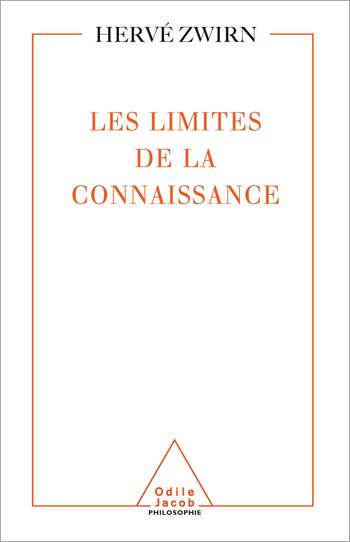
Zwirn, Hervé, Les Limites de la connaissance. Paris: Odile Jacob, 2000.
This reference book can be challenging for the uninitiated, as it covers all forms of the limits of science. It discusses the limits of computation resulting from the complexity of systems and, most importantly, the limits of understanding quantum reality. This raises a question that will interest both scientists and philosophers.
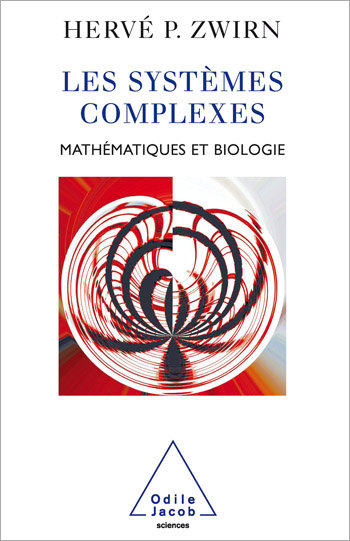
Zwirn, Hervé, Les systèmes complexes. Paris: Odile Jacob, 2005.
The author presents the sciences of complexity through their primary concepts and diverse phenomenology.
Extrait de Réda Benkirane, La Complexité, vertiges et promesses. Histoires de sciences. Nouvelle édition, Benguerir, UM6P-Press, 2023, p. 373-389.
Ameisen Jean-Claude, La Sculpture du vivant. Le suicide cellulaire ou la mort créatrice, Seuil, 1999.
L’apoptose ou le chant de la mort dans l’être cellulaire. Fresque de la vie qui n’existe qu’en bordure de la mort. Réflexion philosophique sur la complexité et les rites de la mort en biologie, plus particulièrement dans le système immunitaire. La mort fascine par sa dynamique de destruction créative.
Atlan Henri, Les Étincelles de hasard. La connaissance spermatique, tome 1, Seuil, 1999.
Un éclairage sur l’ingénierie du vivant par les mythologies du Talmud et de la Kabbale. Le livre ambitionne de fournir des éléments de réponse pour une « généthique » produite par croisement de deux savoirs traditionnels.
Bak Per, Quand la nature s’organise. Avalanches, tremblements de terre et autres cataclysmes, Flammarion, 1999.
Une approche plutôt spécialisée des sciences de la complexité où le physicien danois présente son fameux modèle du tas de sable et son concept de la « criticalité auto-organisée ».
Barrow John D., Pi in the Sky. Counting, Thinking and Being, New York, Oxford University Press, 1992.
Un ouvrage de référence : véritable anthropologie du nombre, histoire des chiffres et philosophie des mathématiques, ce livre dresse en un panorama magistral les grandes énigmes qui ont jalonné le cours de la mathesis jusqu’à nos jours.
Barrow John D., Les Origines de l’univers, Hachette, coll. Sciences, 1994.
Un livre qui s’adresse à un public quelque peu initié et présente les différentes cosmologies sur la forme, la finitude et l’expansion de l’univers.
Barrow John D., La Théorie du tout, Albin Michel, 1994 (rééd. sous le titre La Grande Théorie, Flammarion, coll. Champs, 1996).
Un étonnant parcours de la physique théorique où l’auteur excelle dans une étude comparative des théories physiques contemporaines et des théologies médiévales.
Barrow John D., Impossibility, the Limits of Science and the Science of Limits, New York, Oxford University Press, 1998.
Le titre ne trompe pas, le livre fait le tour de toutes les questions, celles que l’on ne connaît pas et celles que l’on ne pourra jamais connaître… L’auteur explore les problèmes les plus typiques de la complexité mais également les problèmes qui relèvent des limites finies de la connaissance et qui, par conséquent, resteront définitivement hors de portée de toute recherche scientifique.
Barrow John D., Between Inner Space and Outer Space, New York, Oxford University Press, 1999.
Un livre qui réunit des articles de vulgarisation scientifique dans lesquels Barrow aborde les différentes facettes et énigmes de la science contemporaine.
Barrow John D., The Book of Nothing, Londres, Random House, 2000.
Une riche étude de l’approche du vide, du monde du rien dans l’histoire des sciences, de l’Antiquité à nos jours. Il y manque cependant une référence capitale ; l’impasse sur le penseur indien Nagarjuna et sa conception de la vacuité, rétrospectivement, affaiblit l’essai.
Bergé Pierre, Pomeau Yves et Dubois-Gance Monique, Des rythmes au chaos, Odile Jacob, coll. Opus, 1994.
Pour tout savoir sur le chaos déterministe, avec l’avantage de maints graphiques et, aspect non négligeable, un effort louable de mise en perspective historique et culturelle.
Bersini Hugues, Des réseaux et des sciences, Vuibert, 2005. Bersini Hugues, Qu’est-ce que l’émergence ? Ellipses, 2007
Deux ouvrages didactiques introduisant les sciences non linéaires, leurs propriétés, les processus et les expériences qui les mettent en évidence. Bonabeau Éric, Deneubourg Jean-
Louis et Theraulaz Guy, « Les insectes architectes ont-ils leur nid dans la tête ? », La Recherche, n° 313, octobre 1998.
L’article présente l’avantage de comprendre les phénomènes d’émergence à travers le cas intelligible des insectes sociaux.
Bonabeau Éric et Theraulaz Guy, « L’intelligence en essaim », Pour la science, n° 271, mai 2000.
Cet article montre comment la modélisation du comportement collectif des fourmis permet de résoudre certains problèmes dans des domaines variés, qui vont des réseaux de télécommunication au calcul combinatoire tel qu’il est posé par le fameux problème du voyageur de commerce.
Brockman John, The Third Culture, New York, Simon & Schuster, 1995.
L’ouvrage met en scène quelques esprits scientifiques, principalement de la scène intellectuelle américaine. Notre grande enquête doit beaucoup à cet ouvrage dans sa phase d’avant-projet et dans la pré-sélection de notre propre panel de scientifiques.
Capra Fritjof, The Web of Life. A New Scientific Understanding of Living Systems, Anchor Books, 1996.
Compte-rendu des sciences non-linéaires par un scientifique connu pour son acuité intellectuelle et son activisme social et écologique.
Casti John L., Mathematical Mountaintops. The Five Most Famous Problems of All Time, New York, Oxford University Press, 2001.
Cette revue de haut niveau du dixième problème d’Hilbert, de la conjecture des quatre couleurs, de l’hypothèse du continu, de la conjecture de Kepler et du dernier théorème de Fermat est destinée à ceux qui s’intéressent à l’histoire des sciences. L’auteur, membre du Santa Fe Institute, retrace l’historique du développement de chacun de ces problèmes mathématiques, de leurs toutes premières formulations jusqu’à leur résolution plus ou moins formelle. Le rôle de l’ordinateur dans l’élaboration de la démonstration mathématique est longuement évoqué.
Cazenave Michel (sous la direction de) Aux frontières de la science. Dictionnaire de l’ignorance, Albin Michel, 1998.
Cet ouvrage collectif est fort intéressant par certaines de ses contributions mais le titre du livre est trompeur. Le livre n’a strictement rien du dictionnaire et évoque plus ce que l’on connaît que ce que l’on ne connaît pas. Un panorama certes profond du connu et du connaissable, mais peu de choses sont dites sur les espaces de « l’ignorance » et l’inconnaissable.
Chaitin Gregory, « Le hasard des nombres », La Recherche, vol. 22, n° 232, mai 1991, p. 610-615.
Chaitin Gregory, « Undecidability & Randomness in Pure Mathematics », International Journal of Bifurcation and Chaos, n° 4, 1994, p. 3-15.
Chaitin Gregory, The Unknowable, IBM Research Division, T.J. Watson Research Center Hawthorne, New York, 11 février 1999.
Chaitin Gregory, Conversations with a Mathematician, Londres, Springer- Verlag, 2002.
Chaitin Gregory, Hasard et complexité en mathématiques : la quête d’Omega, Flammarion, 2005.
Chaitin Gregory, Proving Darwin: Making Biology Mathematical, New York, Vintage, 2012.
Articles, livres ou extraits de livres sont disponibles sur Internet depuis la page personnelle de l’auteur : https://uba.academia.edu/ GregoryChaitin
Chaitin Gregory, Le Hasard en arithmétique et le déclin et la chute du réductionnisme en mathématiques pures, traduit par Patrick Peccatte.
Changeux Jean-Pierre et Connes Alain, Matière à pensée, Odile Jacob, 1989.
Un débat étrange mais fort instructif entre deux statures scientifiques. Lorsqu’un réductionniste tente de convaincre un platonicien de la vacuité de son point de vue, il en résulte quelques décalages tenaces… Des divergences épistémologiques à méditer comme un exemple original sur les vertus – et les limites – de la multidisciplinarité.
Chuang Isaac et Gershenfeld Neil, « Calcul quantique avec des molécules », Pour la Science, n° 250, août 1998.
Un article de vulgarisation sur le principe de fonctionnement du calculateur quantique par ses deux premiers concepteurs.
Connes Alain, Lichnerowicz André et Schützenberger Marcel Paul, Triangle de pensées, Odile jacob, 2000.
Un livre d’entretiens difficile d’accès, surtout dans sa seconde partie, consacrée à la physique quantique, et destiné aux spécialistes. Néanmoins, la première partie est à recommander pour la discussion sur la logique, ainsi que pour l’exposé des points de vue des mathématiciens « platoniciens » et « formalistes ».
Coveney Peter et Highfield Roger, Frontiers of Complexity. The Search of Order in a Chaotic World, New York, Fawcett Columbine, 1995.
Un livre qui a été très utile dans la phase documentaire de notre travail, avec nombre d’exemples à recommander. La densité des informations le destine à une lecture plus fouillée des sciences de la complexité.
Davies Paul, About Time. Einstein’s Unfinished Revolution, Londres, Viking, 1995.
Ce livre présente de manière abordable des expériences difficiles et profondes, en montrant notamment l’étendue de leurs conséquences ou de leurs paradoxes dans l’histoire contemporaine de la physique. L’auteur, physicien et écrivain scientifique, décrit longuement les perspectives renversantes de la relativité einsteinienne ainsi que les vertiges métaphysiques que pose la notion de temps.
Dawkins Richard, The Selfish Gene, Oxford, Oxford University Press, 1976 (trad. française : Le Gène égoïste, Odile Jacob, 1996).
Un best-seller qui date un peu ; ce livre se voulait une « révolution » de l’évolution naturelle. Il reflète une certaine idéologie de la science, celle du darwinisme plaqué sur la grille du « tout-génétique » qui serait, selon l’auteur, le primat déterministe de l’évolution biologique.
Dehaene Stanislas, « Comment notre cerveau calcule-t-il ? », Pour la Science, n° 236, juin 1997.
Un article qui décrit diverses expériences de neurobiologie et de psychologie cognitive sur le fonctionnement en réseau des différentes aires du cerveau impliquées dans la reconnaissance d’un chiffre ou le calcul. L’auteur est connu pour ses travaux, qui tendent à démontrer le caractère incarné des mathématiques, le fait que celles-ci soient un langage de l’homme et même de l’animal.
Delahaye Jean-Paul, Information, complexité et hasard, Hermès, 1997.
L’auteur mène brillamment une revue des différentes théories sur l’information et la complexité. Sont détaillés de nombreux problèmes de calcul mais aussi de limites de calcul que posent la complexité et le hasard en arithmétique. Nous recommandons également la page personnelle de l’auteur sur Internet (www.lifl.fr/~delahaye/) où figurent de nombreux articles sur les mêmes sujets destinés à la revue Pour la Science.
Delahaye Jean-Paul, Complexité aléatoire et complexité organisée, Éditions Quae, 2009.
L’auteur passe au crible les diverses au point qu’il s’agit désormais de considérer tout d’abord leurs multiplicité et variété.
Dupuy Jean-Pierre, Aux origines des sciences cognitives, La Découverte, 1994.
Un essai sur l’histoire de la cybernétique, à l’origine du développement, entre autres, de l’intelligence artificielle et de la neurobiologie. Le livre s’attarde plus particulièrement sur les Conférences Macy, ces rencontres multidisciplinaires mises en place à partir du milieu des années quarante et qui constituent selon l’auteur, par leur créativité et leurs intuitions, un exemple à méditer dans le contexte actuel des sciences de l’esprit.
Ekeland Ivar, Au hasard, la chance, la science et le monde, Seuil, 1991.
Une plongée dans le hasard, avec un double regard sur les mathématiques du chaos et la culture des rois norvégiens. Une lecture accessible à un large public.
Ekeland Ivar, Le Chaos, Flammarion, coll. Dominos, 1995.
Petite introduction au chaos, avec nombre d’exemples originaux et illustrés.
Ekeland Ivar, « L’écrit en mathématiques », Alliage, Nice, n° 37-38, 1998.
Un article qui montre comment et pourquoi nous assistons à une généralisation de la pratique des mathématiques en dehors des sphères savantes et universitaires.
Ekeland Ivar. Le Syndrome de la grenouille : L’économie et le climat, Odile Jacob, 2015.
L’auteur a orienté ses travaux les plus récents autour de la question climatique et de sa prise de conscience : en témoignent ce livre mais aussi un cours de sensibilisation à l’intention de tous les étudiants de l’université Paris Dauphine.
Farouki Nayla, La Foi et la Raison. Histoire d’un malentendu, Flammarion, 1996.
Farouki Nayla, Qu’est-ce qu’une idée ?, Le Pommier, 1999.
L’intérêt de ces deux livres réside dans leur approche didactique de la philosophie des sciences et de l’histoire des idées.
Gallagher Richard et Appezeller Richard, « Beyond Reductionism », Science, vol. 284, n° 5411, avril 1999, p. 79.
Un éditorial de la très institutionnelle revue américaine Science, en introduction à un dossier consacré aux systèmes complexes.
Gershenfeld Neil, When Things Start to Think, New York, Henry Holt and Company, 1998.
Un livre plaisant, facile à lire, du co-découvreur du calculateur quantique. L’auteur dit tout haut ce que l’utilisateur des technologies de l’information pense tout bas. Une critique toutefois : l’ouvrage évoque de manière quasi publicitaire la « recherche orientée marché » telle qu’elle se pratique au Media Lab du MIT. Il vaut également la peine de consulter sur Internet la page personnelle de Gershenfeld (web.media.mit.edu/~neilg/), qui donne davantage de détails sur les recherches qu’il dirige.
Gleick James, La Théorie du chaos, Albin Michel, 1989.
Le best-seller du journaliste scientifique du New York Times, qui a beaucoup contribué à médiatiser la théorie du chaos et, plus particulièrement, la métaphore du battement d’ailes d’un papillon. Le livre date et les disciplines évoquées se sont entre-temps beaucoup développées.
Gisin Nicolas, L’impensable hasard : Non-localité, téléportation et autres merveilles quantiques, Odile Jacob, 2012.
Livre hardi et abouti où la physique quantique est ici approchée par divers dispositifs expérimentaux. L’auteur affirme posément que la nature est non locale : attribut renversant de la réalité physique.
Goldenfeld Nigel et Kadanoff Leo P., « Simple Lessons from Complexity », Science, vol. 284, n° 5411, avril 1999, p. 87-89.
Un article synthétique, écrit dans le cadre du dossier spécial consacré en 1999 par Science à la complexité.
Goodwin Brian, How the leopard changed its spots. The Evolution of Complexity, New York, Simon & Schuster, 1994.
Une véritable vision philosophique de la biologie. Difficile en première lecture mais riche d’exemples et d’enseignements. Destiné à un public intéressé.
Goodwin Brian, « All for one… One for all », New Scientist. 13 juin 1998. Goodwin Brian, « From Control to Participation Via a Science of Qualities », ReVision, 1999.
Deux articles où s’expriment l’esprit critique et la vision créative de l’auteur qui, à travers ses différents écrits, ne propose ni plus ni moins qu’une refondation de la science sur des bases plus qualitatives que quantitatives.
Goodwin Brian et Solé Ricard, Signs of Life: How Complexity Pervades Biology, New York, Basic Books, 2001.
Un livre multidisciplinaire et à plusieurs niveaux de lecture où Brian Goodwin, en collaboration avec l’un de ses anciens étudiants, introduit en biologie l’étude de la complexité à travers toutes sortes d’exemples de disciplines diverses. L’ouvrage contient de nombreux addenda à l’intention de lecteurs scientifiques désireux d’aller plus loin dans la description des expériences mentionnées.
Greene Brian, L’Univers élégant. Une révolution scientifique : de l’infiniment grand à l’infiniment petit, l’unification de toutes les théories de la physique, Robert Laffont, 2000.
Un superbe essai descriptif de la physique d’avant-garde, celle des cordes qui seraient les ultimes composants de la matière. L’auteur explique dans un style étonnamment clair et imagé l’une des théories les plus difficiles que l’esprit scientifique ait à concevoir de nos jours.
Gribbin John, Une Brève Histoire des sciences, Larousse, 1999.
Un livre richement illustré et agrémenté d’une multitude d’exemples, encadrés et addenda. À recommander comme première approche de l’histoire des sciences.
Gribbin John, Simplicité profonde. Le chaos, la complexité et l’émergence de la vie, Flammarion, 2010.
Ouvrage de très bonne facture exposant les diverses facettes des sciences de la complexité.
Guillen Michael, Des ponts vers l’infini. Des mathématiques à figure humaine, Albin Michel, 1992.
Un exposé clair et didactique à l’intention d’un lecteur généraliste sur les grandes questions mathématiques, du théorème de Gödel à la théorie des jeux en passant par la combinatoire et les suites d’infini de Cantor.
Hofstadter Douglas, Gödel, Escher, Bach: An Eternal Golden Brand, New York, Basic Books, 1979 (trad. française : Gödel, Escher, Bach : les brins d’une guirlande éternelle, InterÉditions, 1996).
Cet ouvrage publié en 1979 a connu un vif succès et a accompagné la montée en puissance de l’intelligence artificielle. Il mêle de manière originale les lithographies d’Escher avec des réflexions sur les mathématiques de l’auto-référence et le formalisme logique. Sont déclinés, sous diverses formes de narration, les phénomènes d’émergence à l’œuvre dans l’art, les mathématiques et la biologie.
Holton Gerald, L’Imagination scientifique, Gallimard, 1981.
Un classique de l’histoire des sciences, où l’auteur voit à certaines étapes de la pensée scientifique des conceptions marquantes qu’il nomme thêmata. Ces thêmata, qui sollicitent et gouvernent à différents niveaux les scientifiques, aident à l’émergence de « moments fondamentaux » de la science et tendraient à démontrer qu’elle est un « fait culturel total ».
Horgan John, The End of Science. Facing the Limits of Knowledge in the Twilight of the Scientific Age, Reading, Mass., Addison-Wesley, 1996.
Best-seller, ce livre a déclenché une polémique lors de sa sortie aux États-Unis. À lire non pas tellement pour la thèse développée mais pour le style vulgarisateur, fondé sur un impressionnant travail de terrain, et les portraits, croqués de manière souvent satirique et impertinente, de quelques mandarins de la science.
Horgan John, « La science ? Il ne lui reste plus rien à découvrir ! », Le Temps stratégique, n° 84, novembre-décembre 1998.
Un article qui résume la thèse de Horgan sur la « fin de la science ».
Kaku Michio, Visions. Comment la science va révolutionner le XXIe siècle, Albin Michel, 1999.
Une communication grand public de la science, qui dresse un panorama de l’avenir de la science pour les cinquante prochaines années. Le début et la fin du livre sont passionnants.
Kauffman Stuart, At Home in the Universe. The Search for the Laws of Self-Organization and Complexity, Oxford, New York, Oxford University Press, 1995.
Kauffman Stuart, Investigations, Oxford, New York, Oxford University Press, 2000.
Deux livres difficiles destinés à un public d’initiés. L’auteur ambitionne de développer une biologie générale susceptible de réformer la théorie darwinienne de l’évolution.
Kauffman Stuart, Reinventing the Sacred: A New View of Science, Reason, and Religion, Oxford University Press, 2008.
Kauffman Stuart, Humanity in a Creative Universe, Oxford University Press, 2016.
Kauffman Stuart, A World Beyond Physics. The Emergence and Evolution of Life, Oxford University Press, 2019.
L’auteur, doté d’une singulière puissance de conceptualisation, poursuit au travers de ces trois ouvrages sa réflexion théorique sur les sciences contemporaines en résonance avec les humanités.
Klein Étienne, Conversations avec le Sphinx. Les paradoxes en physique, Albin Michel, 1991.
Approche didactique du rôle des paradoxes-oxymorons, le livre détaille les cas classiques tels que la dualité onde-corpuscule, l’expérience du chat de Schrödinger, l’expérience EPR, et se termine sur la flèche du temps.
Kuhn Thomas, La Structure des révolutions scientifiques, Flammarion, 1976 (rééd. coll. Champs, 1993).
Un ouvrage de référence dans l’histoire et la philosophie des sciences, où l’auteur introduit la notion centrale de paradigme scientifique qui, aujourd’hui, semble remise en cause.
Leakey Richard et Lewin Roger, La Sixième Extinction. Évolution et catastrophes, Flammarion, 1997.
Un essai magistral sur la complexité croissante de la vie qui, à travers une démonstration convaincante, met en garde contre la catastrophe écologique que fait peser l’activité humaine sur la planète. La thèse centrale du livre est que l’hominisation, notamment par les extinctions massives d’espèces vivantes qu’elle entraîne, correspondrait à la sixième catastrophe qu’aurait connue l’évolution naturelle en quatre milliards d’années. Une réflexion qui permet de situer la place véritable de l’humanité dans le temps et dans l’espace de la biosphère.
Lecourt Dominique (sous la direction de), Dictionnaire d’histoire et philosophie des sciences, PUF, 1999.
Indispensable à toute étude sérieuse et richement documentée sur les sciences contemporaines. Nous renvoyons notamment aux articles de Jean-Louis Lemoigne aux entrées « Complexité », « Computation » et « Système », à ceux de Houriya Bennis-Sinaceur sur le « Modèle » et l’« Infini mathématique », à celui de Claire Kenyon sur la « Complexité algorithmique » et à celui de Jean-Paul Delahaye sur « Information et codage ».
Leibniz Gottfried Wilhelm, Discours de métaphysique. Essais de Théodicée. Monadologie, Le Monde de la philosophie/Flammarion, 2008.
Le philosophe et mathématicien développe au XVIIIe siècle une pensée visionnaire de la complexité dans sa Théodicée – avec notamment son appréhension du mal évalué en termes d’optimisation combinatoire – et son éblouissant traité de Monadologie qui décline 90 propositions vitalistes sur le simple ; autant de points de vue, perspectives sur le complexe. Les relations tout-partie trouvent avec Leibniz et son souci du détail, de la manière et du pli une épistémologie véritablement alternative par rapport à la vision réductionniste et l’analyse classique. La monadologie permet de mieux comprendre comment plus on creuse, plus on s’enfonce en réalité, plus la matière est marquée par la multiplicité. La matière ne se découpe pas aussi bien qu’elle se plie, replie, remplit, déploie ses plis qui « vont à l’infini ». L’œuvre de Leibniz explicite les rapports entre le fragment (in)signifiant et l’ensemble (in)commensurable, que ce soit dans les sciences du vivant, de la matière et du calcul.
Lewin Roger, Complexity. Life at the Edge of Chaos, Chicago, University of Chicago Press, 1999 (seconde édition).
Un livre comparable dans sa démarche à celui de Mitchell Waldrop sur les sciences de la complexité au Santa Fe Institute. Une lecture plaisante et une revue abordable de la complexité où l’auteur mêle ses propres investigations et réflexions à des extraits d’entretiens avec de nombreux scientifiques, dont Stuart Kauffman, Christopher Langton et Brian Goodwin.
Lewontin Roger, It ain’t necessarily so: the dreams of the human genome and other Illusions, New York, New York Review of Books, 2000.
Une collection d’articles parus dans The New York Review of Books qui, très finement, déconstruisent le déterminisme biologique et les nouvelles mythologies liées à l’étude du génome. Où l’on réalise que le défrichement du génome humain ne signifie pas son déchiffrement. L’ouvrage est à situer dans le contexte américain où l’auteur, un biologiste de l’université de Harvard, signale, en même temps qu’il les dénonce, les ravages socioculturels du néodarwinisme et l’illusion de la « survie du plus beau ».
Linde Andrei, « The Self–Reproducing Inflationary Universe », Scientific American, novembre 1994 (trad. française : « L’univers inflatoire auto- reproducteur », Pour la Science, n° 28, janvier 1995).
Le cosmologiste russe présente sa vision du pré-univers à l’origine du big bang.
Luminet Jean-Pierre, L’Univers chiffonné, Fayard, 2001.
L’auteur s’interroge sur la nature, la grandeur et l’origine de l’univers, la thèse récurrente du livre étant que « l’univers chiffonné » serait en réalité moins grand qu’il n’en a l’air.
Maddox John, Ce qu’il reste à découvrir, Bayard, 2000.
Un vaste panorama des découvertes passées et à venir des sciences à la fin du XXe siècle par l’ancien rédacteur en chef de la revue Nature.
Mankiewicz Richard, Histoire des mathématiques, Seuil, 2001.
Une introduction à l’histoire des mathématiques destinée à un lecteur généraliste, articulée en chapitres concis et agrémentée d’une riche iconographie.
Margulis Lynn, Symbiotic Planet: A New Look At Evolution, New York, Basic Books, 1999.
Ouvrage révélateur de la complexité microbienne associée à l’origine du vivant et à la spéciation. L’auteur fait prendre conscience que nous sommes nous-mêmes le processus émergent de l’univers bactériel.
Miquel Paul-Antoine, Comment penser le désordre ?, Fayard, 2000.
Un essai philosophique original sur le désordre et la contingence qui montre que les sciences humaines ne sont pas sans armes pour interpréter de manière utile et subtile les énoncés des sciences exactes.
Morin Edgar, La Méthode I, La nature de la nature, Seuil, 1977.
Un ouvrage de sociologie des sciences. Morin, très tôt, a identifié le rôle des sciences dans la compréhension du monde. Un livre qui, par son « jargon », s’adresse davantage à l’universitaire mais manifeste une grande intuition.
Morin Edgar, Introduction à la pensée complexe, Éditions sociales françaises, 1990.
Une courte et limpide approche de la complexité qui peut intéresser les spécialistes du management autant que ceux de la sociologie. À recommander comme première lecture sur le sujet.
Morin Edgar, La Complexité humaine, Flammarion, 1994.
Textes réunis de divers livres de Morin. Un ouvrage qui a un souci de synthèse et l’avantage d’embrasser l’essentiel de l’œuvre prolifique du sociologue de la complexité.
Morin Edgar, Mes démons, Stock, 1994.
À lire, en particulier le chapitre 4, « Du sous-marrane au post- marrane », qui est une leçon vécue de la complexité appliquée à la compréhension de la diversité culturelle. Où Morin situe ses origines socioculturelles dans l’univers de la diaspora sépharade de Salonique et comment, en bordure de l’exil, cela l’amène à penser le judaïsme contemporain. Lumineux, pertinent et fraternel.
Morin Edgar, La Méthode V, L’humanité de l’humanité. L’identité humaine, Seuil, 2001.
Ce livre répond à un besoin de comprendre et d’enseigner ce qu’est l’humanité dans sa globalité et ses spécificités.
Napier David, Age of Immunology – Conceiving a Future in an Alienating World, University of Chicago Press, 2002.
Livre de sciences sociales telles qu’elles devraient être ; l’auteur entreprend une lecture créatrice de la complexité immunologique appliquée au champ de l’anthropologie.
Nottale Laurent, La Relativité dans tous ses états, Hachette, coll. Sciences, 1998.
L’auteur expose dans ce livre la théorie de la relativité d’échelle.
Peccatte Patrick, Philosophie et mathématiques : sur le quasi-empirisme, Journée d’étude REHSEIS (Recherches épistémologiques et historiques sur les sciences exactes et les institutions scientifiques), 23 juin 1998.
Un article qui a le mérite d’introduire au débat sur l’empirisme en philosophie des mathématiques, en explicitant plus particulièrement les positions de penseurs majeurs comme Imre Lakatos, Hilary Putnam et Thomas Tymoczko.
Penrose Roger, The Emperor’s New Mind. Concerning Computers, Minds, and the Laws of Physics, New York, Oxford University Press, 1989.
Penrose Roger, Les Deux Infinis et l’esprit humain, Flammarion, 1999.
Le physicien britannique développe dans ces deux livres ses fameux énoncés sur l’irréductibilité du monde mental à toute forme de computation. Il est de surcroît l’un des rares à penser qu’une physique quantique est à l’œuvre dans le fonctionnement du cerveau.
Prigogine Ilya et Stengers Isabelle, La Nouvelle Alliance. Métamorphose de la science, Gallimard, 1979.
Un ouvrage de référence, difficile en maints endroits, sur la science non linéaire. Le temps passé depuis sa parution n’a fait que rendre plus puissante sa portée visionnaire.
Prigogine Ilya, Les Lois du chaos, Flammarion, coll. Champs, 1994.
Un livre très spécialisé, ponctué de nombreux aphorismes.
Prigogine Ilya, La Fin des certitudes. Temps, chaos et lois de la nature, Odile Jacob, 1996.
Prigogine, entre deux équations, livre des énoncés à portée philosophique sur la non-linéarité, l’incertitude et le complexe.
Prigogine Ilya, De l’être au devenir (entretien), Liège, Stanké, 1999.
Un petit livre d’entretien qui reprend les principaux points de vue philosophiques du chercheur belge.
Ricard Matthieu et Thuan Trinh Xuan, L’Infini dans la paume de la main. Du big bang à l’éveil, Fayard-Nil Éditions, 2000.
Un livre d’entretiens qui évoque à grandes enjambées les grandes théories scientifiques et les idées du bouddhisme. Intéressant et instructif sur les relations entre science et spiritualité. Les auteurs sont un physicien d’origine vietnamienne et un Français converti au bouddhisme. Le sentiment de certitude émane du moine plus que du scientifique.
Rifkin Jeremy, La Fin du travail, La Découverte, 1997.
Rifkin Jeremy, Le Siècle biotech. Le commerce des gènes dans le meilleur des mondes, La Découverte, 1998.
Rifkin Jeremy, L’Âge de l’accès. La révolution de la nouvelle économie, La Découverte, 2000.
Magistrale trilogie sur une fin de siècle technologiquement mouvementée. Rifkin est le prototype du citoyen activiste à venir, celui qui occupera l’espace entre scientifiques et littéraires, entre élus et militants politiques.
Ronan Colin, Histoire mondiale des sciences, Seuil, 1988 (version française de The Cambridge Illustrated History of the World’s Science, Twickenham, Middlesex, Newnes Books, 1983).
Un parcours historique des sciences, avec un effort louable de prise en compte des différents apports culturels. Nous n’en sommes qu’au tout début de ce type de démarche, l’histoire des sciences devant être continuellement « révisionniste » pour découvrir ou redécouvrir, à chaque nouvelle orientation contemporaine des sciences, des apports anciens, des sources jusque-là ignorées parce que non traduites ou peu accessibles.
Salomon Jean-Jacques, Survivre à la science. Une certaine idée du futur, Albin Michel, 1999.
Un ouvrage sur les possibles dangers de la science dans une ère où, de plus en plus, on « croit » en elle – au sens religieux du terme. L’auteur est très au fait des risques que la science peut induire si on ne lui oppose pas, du côté de la société en tout cas, une distance critique. Lire en particulier l’histoire des premières bombes nucléaires américaines.
Sapoval Bernard, Universalités et fractales. Jeux d’enfant ou délits d’initiés ?, Flammarion, 1997.
À travers une étude détaillée et richement illustrée d’exemples de la nature et du monde industriel, l’auteur éclaire les lois de la géométrie fractale qui révèlent une « universalité du troisième type ».
Serres Michel (sous la direction de), Éléments d’histoire des sciences, Bordas (rééd. Larousse, coll. In extenso, 1997).
À lire, le chapitre sur le gnomon, où Serres présente les premiers objets d’intelligence artificielle.
Serres Michel, Éclaircissements. Entretiens avec Bruno Latour, François Bourin, 1992 (rééd. coll. Champs, 1994).
Une introduction à la pensée de Michel Serres, pour comprendre pourquoi et surtout comment le philosophe allie le poème au théorème.
Serres Michel, Variations sur le corps, Le Pommier, 1999.
Une réflexion sur la chair, la peau, les membres à l’ère de la pensée algorithmique, de l’intellligence artificielle – toujours désincarnée selon l’auteur. L’iconographie, quant à elle, « incarne » utilement les arguments développés.
Serres Michel, Hominescence, Le Pommier, 2001.
L’idée centrale du livre est qu’Homo sapiens sapiens poursuit son évolution et sa transformation, à un point tel qu’il a fallu à l’auteur inventer un nouveau mot pour décrire la situation : l’« hominescence » serait à l’humanité ce que l’adolescence est à l’individu. Nous sommes entrés dans le cycle de nouvelles morts et de nouvelles vies.
Siegfried Tom, The Bit and the Pendulum. From Quantum Computing to M Theory-The New Physics of Information, New York, Wiley & Sons, 1999.
Une exploration d’un nouveau domaine de la physique en plein essor, celui qui tend à considérer que tout dans l’univers est information. Dans cette perspective, l’information serait à l’origine de la matière, selon la formulation énigmatique – it from bit – du physicien américain John Wheeler. Le livre évoque les débuts de l’information quantique et ses applications possibles dans la cryptographie.
Sinaceur Hourya, article « Gödel », Dictionnaire encyclopédique Quillet, supplément, 1990.
Pour une présentation des plus rigoureuses du logicien autrichien Kurt Gödel et de ce qu’énonce précisément son – trop – fameux théorème sur l’incomplétude.
Sinaceur Hourya et Bourguignon Jean-Pierre, « David Hilbert et les mathématiques du XXe siècle », La Recherche, n° 257, septembre 1993, p. 982-989.
Sinaceur Hourya, « L’infini », La Recherche, n° 268, septembre 1994, p. 904-910.
Deux articles clairs et instructifs sur deux sujets hérités de la fin du XIXe siècle et qui ont eu une influence décisive sur le développement ultérieur des mathématiques.
Sokal Alan, « Transgressing the Boundaries: Toward a Transformative Hermeneutics of Quantum Gravity », Social Text, n° 46-47, printemps- été 1996, p. 217-252.
L’article par lequel le scandale est arrivé, où l’auteur, physicien à l’université de New York, a publié une parodie de texte qui a passé les mailles éditoriales de la revue américaine de sciences sociales Social Text. La polémique qu’il a déclenchée sur l’état des relations entre sciences humaines et sciences exactes a, pour l’essentiel, agité les milieux culturels européens.
Spire Arnaud, La Pensée-Prigogine, Desclée de Brouwer, 1998.
Un travail de mise en relief d’entretiens menés avec le scientifique belge sur une longue période, suivis d’autres témoignages intéressants.
Steels Luc, « Intelligence–Dynamics and Representations », in Steels Luc (sous la direction de), The Biology and Technology of Intelligent Autonomous Agents, Berlin, Springer-Verlag, 1995.
Steels Luc, « When Are Robots Intelligent Autonomous Agents? »,
Journal of Robotics and Autonomous System, n° 15, 1995, p. 3-9.
Steels Luc, « Self-Organising Vocabularies », in Langton Chris (sous la direction de), Proceedings of Alife V, Nara Japan, 1996.
Steels Luc, « The Origins of Intelligence », in Proceedings of the Carlo Erba Foundation Meeting on Artificial Life, Fondazione Carlo Erba, Milan, 1996.
À travers la description et la justification de ses dispositifs expérimentaux sur l’autonomie, l’évolution et le langage de ses robots, l’auteur expose dans ces articles sa conception de l’intelligence artificielle. Articles disponibles sur Internet depuis la page personnelle de l’auteur : https://ai.vub.ac.be/team/steels
Stewart Ian, Dieu joue-t-il aux dés ? Les mathématiques du chaos, Flammarion, 1992.
Stewart Ian, From Here to Eternity. A Guide to Today’s Mathematics, Oxford, Oxford University Press, 1996.
Stewart Ian, La Nature et les Nombres, Hachette, 1998.
Trois livres d’un mathématicien reconnu pour son talent de vulgarisation. Dieu joue-t-il aux dés ? et La Nature et les Nombres sont davantage centrés sur les thèmes de la complexité et de la non- linéarité.
Terré-Fornacciari Dominique, Les Sirènes de l’irrationnel. Quand la science touche à la mystique, Albin Michel, 1991.
Une critique sérieuse des approches scientifiques de la complexité, du chaos et de l’auto-organisation. Une étude documentée sur les philosophies contre la rationalisation et la shadow metaphysics. La thèse de l’auteur n’est pas du genre à être balayée d’un revers de la main mais l’ouvrage date et, entre-temps, les approches incriminées ont connu un développement exponentiel et sont de plus en plus au centre de l’activité scientifique.
Thom René, Prédire n’est pas expliquer, Flammarion, coll. Champs, 1993.
Un livre d’entretiens où le mathématicien revient longuement sur sa fameuse théorie des catastrophes qu’il a formulée pour l’étude mathématique des formes. Thom y parle aussi de philosophie et de biologie, deux domaines auxquels il s’est particulièrement intéressé.
Turing Alan, « Computing Machinery and Intelligence », Mind, vol. 59, n° 236, 1950.
Un article de référence qui constitua l’acte de fondation de l’intelligence artificielle. Le logicien britannique expose le jeu de l’imitation entre machine et humain.
Varela Francisco, Autonomie et connaissance. Essai sur le vivant, Seuil, 1989.
Ce livre expose la théorie de l’autopoïese développée vingt ans plus tôt par Varela et Maturana, thèse qui a consacré leur renom dans le monde de la biologie théorique et au-delà.
Varela Francisco, Connaître. Les sciences cognitives, tendances et perspectives, Seuil, 1989.
Une courte et instructive étude qui dresse une synthèse historique sur les sciences de l’esprit.
Varela Francisco, « Qu’est-ce que la vie artificielle ? », Pour la Science, n° 240, octobre 1997, p. 10-12.
Un article qui part d’une description d’organisation biologique pour proposer en intelligence artificielle le modèle de boucle perception- action comme modèle alternatif à la représentation symbolique et au traitement de l’information.
Varela Francisco, « Le cerveau n’est pas un ordinateur », La Recherche, n° 308, avril 1998, p. 109-112.
Un entretien où Varela expose de manière simple et imagée sa conception de l’intelligence artificielle et de la conscience en même temps que ses critiques des interprétations dominantes en sciences cognitives.
Verdier Norbert, Qu’est-ce que les mathématiques ?, Le Pommier, 2000.
Une introduction didactique aux grandes questions et énigmes mathématiques à l’intention d’un public aussi large que possible.
Waldrop M. Mitchell, Complexity: The Emerging Science at the Edge of Order and Chaos, New York, Simon & Schuster, 1993.
Cette grande enquête au Santa Fe Institute, où l’auteur a longuement côtoyé les scientifiques, décrit de façon détaillée l’historique du processus de création de l’institut et l’arrière-plan psychologique de ses fondateurs et futurs animateurs.
Wilson Edward O., L’Unicité du savoir. De la biologie à l’art, une même connaissance, Robert Laffont, 2000.
Une intéressante revue des divers domaines et facettes des sciences contemporaines avec, à la clé, une critique de la complexité par un réductionniste de la vieille école. L’auteur reconnaît néanmoins que le plus grand défi de la science est « la description complète et précise des systèmes complexes » et observe que la complexité sans réductionnisme conduit à l’art tandis que complexité et réductionnisme mènent à la science.
Wolfram Stephen, A New Kind of Science, Champaign, Wolfram Media, 2002.
La bible des automates cellulaires, où pointe déjà une définition ultra-concise d’un nouveau genre de science, celle du catalogue de tous les motifs possibles. La thèse centrale de Wolfram, déclinée en plus d’un millier de pages très richement illustrées, se résume à une seule phrase : des programmes informatiques simples comme les automates cellulaires peuvent engendrer une ahurissante complexité qui pourrait expliquer celle de l’univers et donc représenter une solution explicative infiniment plus simple que les lois de la nature.
Ziemelis Karl, « Complex Systems », Nature, vol. 410, n° 6825, mars 2001, 241-284.
Un éditorial paru dans la revue de référence Nature à l’occasion d’un dossier spécial consacré aux systèmes complexes.
Zwirn Hervé, Les Limites de la connaissance, Odile Jacob, 2000.
Un livre de référence, parfois difficile pour le non-initié, sur toutes les formes des limites de la science. Sont exposées les limites de computation issues de la complexité des systèmes et surtout les limites de compréhension de la réalité quantique. Une interrogation qui intéressera à la fois scientifiques et philosophes.
Zwirn Hervé, Les systèmes complexes, Odile Jacob, 2005.
L’auteur expose les sciences de la complexité au travers de ses principaux concepts ainsi que de sa phénoménologie variée.
Extrait de Réda Benkirane, La Complexité, vertiges et promesses. Histoires de sciences. Nouvelle édition, Benguerir, UM6P-Press, 2023, p. 373-389.
Monadology – Leibniz

La Monadologie
par
Gottfried Wilhelm Leibniz
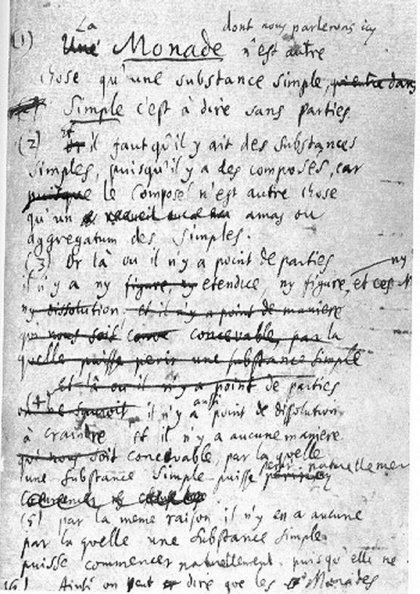
La Monadologie, 1714, manuscrit
« Leibniz, philosophe et mathématicien, développe au XVIIIe siècle une pensée visionnaire de la complexité dans sa Théodicée – avec notamment son appréhension du mal évalué en termes d’optimisation combinatoire – et son éblouissant traité de Monadologie qui décline 90 propositions vitalistes sur le simple ; autant de points de vue, perspectives sur le complexe. Les relations tout-partie trouvent avec Leibniz et son souci du détail, de la manière et du pli une épistémologie véritablement alternative par rapport à la vision réductionniste et l’analyse classique. La monadologie permet de mieux comprendre comment plus on creuse, plus on s’enfonce en réalité, plus la matière est marquée par la multiplicité. La matière ne se découpe pas aussi bien qu’elle se plie, replie, remplit, déploie ses plis qui « vont à l’infini ». L’œuvre de Leibniz explicite les rapports entre le fragment (in)signifiant et l’ensemble (in)commensurable, que ce soit dans les sciences du vivant, de la matière et du calcul. »
R. Benkirane, La Complexité, vertiges et promesses. Histoires de sciences, UM6P-Press, 2023.
« Leibniz est un isthme (barzakh) entre les sciences traditionnelles (ayant de tout temps exprimé la complexité en figures et en paraboles) et les sciences exactes (qui la décrivent en langage physico-mathématique). Il est l’homme qui manie à la fois la formule et l’équation, la science du nom et celle du nombre. »
R. Benkirane, Islam à la reconquête du sens, « Monadologie et coranologie: magnifi-science de l’univers», 2017, 2021.
…o0o…
The Monadology
“Leibniz, a philosopher and mathematician, developed a visionary concept of complexity in the 18th century in his Theodicy – with his understanding of evil as combinatorial optimization – and his dazzling treatise on Monadology, which contains 90 vitalist propositions about the monad; as many points of view, perspectives on complexity. The relationships between whole and part, as found in Leibniz’s attention to detail, manner, and fold, present an alternative epistemology when compared to the reductionist view and classical analysis. The Monadology helps us better understand how the deeper we delve, the more we plunge into reality, and the more matter is characterized by multiplicity. Matter does not so much cut as it folds, refolds, fills, and unfolds its folds which “reach to infinity”. Leibniz’s work explains the relationships between the (in)significant fragment and the (in)commensurable whole, be it in the life sciences, matter, and computation.
With his understanding of evil as combinatorial optimization, Leibniz, a philosopher and mathematician, developed a visionary concept of complexity in the 18th century in his Theodicy and his dazzling treatise on Monadology, which contains 90 vitalist propositions about simplicity.”
Reda Benkirane, Complexity, Vertigoes and Promises. Histories of Sciences, UM6P-Press, 2023.
“Leibniz is an isthmus (barzakh) between traditional sciences (which have always expressed complexity in figures and parables) and exact sciences (which describe it in physico-mathematical language). He is the man who handles both the formula and the equation, the science of the name and that of the number.”
Reda Benkirane, Islam in the Reconquest of Meaning, “Monadology and Quranology: Magnifi-science of the universe”, 2017, 2021.
المونادولوجيا
لايبنتس، الفيلسوف والرياضي، قام في القرن السابع عشر بتطوير تفكير رؤيوي حول التعقيد في كتابه “اللاهوتيات”، حيث قدم تقديرًا للشر بصورة تنظيمية محسوبة ومعالجة في مفهوم التحسين التوافقي، وألَّف أيضًا مؤلفًا رائعًا بعنوان “علم الأشياء البسيطة” الذي يحتوي على 90 اقتراحًا حيويًا حول الأمور البسيطة؛ وهذه كلها وجهات نظر وآفاق على التعقيد. يُظهر العلاقات الكل-الجزء نظرًا لاهتمام لايبنتس بالتفاصيل والأسلوب والطي في عرضه، منهجًا علميًا بديلًا تمامًا مقارنةً بالرؤية الاختزالية والتحليل الكلاسيكي. تساعد مونادولوجيته في فهم كيف يزيد الحفر أكثر، كيفما تعمقنا، كلما كانت المادة مميزة بالتعدد. المادة لا تقطع، بل تثني وتعكس وتملأ وتنشر طياتها التي “تذهب إلى اللانهاية”. يُوضح عمل لايبنتس العلاقات بين الجزء (غير المعنوي) والمجموع، سواء في علوم الكائنات الحية أو العلوم الفيزيائية والرياضية وعلم الحساب.
– ر. بنكيران، التعقيد، دوار ووعود. تاريخ العلوم، UM6P-Press، 2023.
“لايبنتس هو ارتباط (برزخ) بين العلوم التقليدية (التي عبَّرت منذ الأزل عن التعقيد بأشكال وأمثال) والعلوم الدقيقة (التي تصفها بلغة فيزيائية ورياضية). إنه الرجل الذي يتعامل مع الصيغة والمعادلة على حد سواء، علم اسم الشيء وعلم العدد.”
– ر. بنكيران، الإسلام في استعادة المعنى، “علم الأشياء البسيطة وعلم القرآن: المعرفة السامية للكون”، 2017، 2021.
Recommended Readings
|
Johann Chapoutot, Les irresponsables. Qui a porté Hitler au pouvoir ? (Gallimard, 2025)
Un consortium libéral-autoritaire, tissé de solidarités d’affaires, de partis conservateurs, nationalistes et libéraux, de médias réactionnaires et d’élites traditionnelles, perd tout soutien populaire : au fil des élections, il passe de presque 50 % à moins de 10 % des voix et se demande comment garder le pouvoir sans majorité, sans parlement, voire sans démocratie. Cet extrême centre se pense destiné à gouverner par nature : sa politique est la meilleure et portera bientôt ses fruits. Quand les forces de répression avertissent qu’elles ne pourront faire face à un soulèvement généralisé, le pouvoir, qui ne repose sur aucune base électorale, décide de faire alliance avec l’extrême droite, avec laquelle il partage, au fond, à peu près tout, et de l’installer au sommet. |
|
|
Johann Chapoutot, Libres d’obéir. Le management, du nazisme à aujourd’hui (Gallimard, 2020)
Reinhard Höhn (1904-2000) est l’archétype de l’intellectuel technocrate au service du IIIᵉ Reich. Juriste, il se distingue par la radicalité de ses réflexions sur la progressive disparition de l’État au profit de la «communauté» définie par la race et son «espace vital». Brillant fonctionnaire de la SS – il termine la guerre comme Oberführer (général) –, il nourrit la réflexion nazie sur l’adaptation des institutions au Grand Reich à venir – quelles structures et quelles réformes? Revenu à la vie civile, il crée bientôt à Bad Harzburg un institut de formation au management qui accueille au fil des décennies l’élite économique et patronale de la République fédérale : quelque 600 000 cadres issus des principales sociétés allemandes, sans compter 100 000 inscrits en formation à distance, y ont appris, grâce à ses séminaires et à ses nombreux manuels à succès, la gestion des hommes. Ou plus exactement l’organisation hiérarchique du travail par définition d’objectifs, le producteur, pour y parvenir, demeurant libre de choisir les moyens à appliquer. Ce qui fut très exactement la politique du Reich pour se réarmer, affamer les populations slaves des territoires de l’Est, exterminer les Juifs. |
Johann Chapoutot, Free to Obey. How the Nazis invented Modern Management (Europa editions, 2023)
Reinhard Höhn (1904-2000) was a commander of the SS, one of Nazi Germany’s most brilliant legal minds, and an archetype of the fervid technocrats and intellectuals that built the Third Reich. Following Germany’s defeat, after a few years in hiding, he emerged in the early 1950s as the founder and director of a renowned management school in Lower Saxony. Höhn’s story wouldn’t be very different from that of many other prominent Nazis if not for the fact that a vast number of Germany’s postwar business leaders—more than 600,000 executives—were educated at his management school. In this fascinating book, Johann Chapoutot, one of France’s most brilliant historians, traces the profound links between Nazism and the principles of modern corporate management, our definitions of success, and a concept of personal freedom that masks rigid hierarchical structures of power and control. “One of the most gifted European historians of his generation.”—Timothy Snyder, New York Times best-selling author of On Tyranny |
|
James C. Scott, Two Cheers for Anarchism: Six Easy Pieces on Autonomy, Dignity, and Meaningful Work and Play (Princeton University Press, 2025)
James Scott taught us what’s wrong with seeing like a state. Now, in his most accessible and personal book to date, the acclaimed social scientist makes the case for seeing like an anarchist. Inspired by the core anarchist faith in the possibilities of voluntary cooperation without hierarchy, Two Cheers for Anarchism is an engaging, high-spirited, and often very funny defense of an anarchist way of seeing—one that provides a unique and powerful perspective on everything from everyday social and political interactions to mass protests and revolutions. Through a wide-ranging series of memorable anecdotes and examples, the book describes an anarchist sensibility that celebrates the local knowledge, common sense, and creativity of ordinary people. The result is a kind of handbook on constructive anarchism that challenges us to radically reconsider the value of hierarchy in public and private life, from schools and workplaces to retirement homes and government itself. Beginning with what Scott calls “the law of anarchist calisthenics,” an argument for law-breaking inspired by an East German pedestrian crossing, each chapter opens with a story that captures an essential anarchist truth. In the course of telling these stories, Scott touches on a wide variety of subjects: public disorder and riots, desertion, poaching, vernacular knowledge, assembly-line production, globalization, the petty bourgeoisie, school testing, playgrounds, and the practice of historical explanation. Far from a dogmatic manifesto, Two Cheers for Anarchism celebrates the anarchist confidence in the inventiveness and judgment of people who are free to exercise their creative and moral capacities.
|
Marshall Sahlins, The New Science of the Enchanted Universe: An Anthropology of Most of Humanity (Princeton University Press, 2022)
From the perspective of Western modernity, humanity inhabits a disenchanted cosmos. Gods, spirits, and ancestors have left us for a transcendent beyond, no longer living in our midst and being involved in all matters of everyday life from the trivial to the dire. Yet the vast majority of cultures throughout human history treat spirits as very real persons, members of a cosmic society who interact with humans and control their fate. In most cultures, even today, people are but a small part of an enchanted universe misconstrued by the transcendent categories of “religion” and the “supernatural.” The New Science of the Enchanted Universe shows how anthropologists and other social scientists must rethink these cultures of immanence and study them by their own lights. In this, his last, revelatory book, Marshall Sahlins announces a new method and sets an exciting agenda for the field. He takes readers around the world, from Inuit of the Arctic Circle to pastoral Dinka of East Africa, from Araweté swidden gardeners of Amazonia to Trobriand Island horticulturalists. In the process, Sahlins sheds new light on classical and contemporary ethnographies that describe these cultures of immanence and reveals how even the apparently mundane, all-too-human spheres of “economics” and “politics” emerge as people negotiate with, and ultimately usurp, the powers of the gods. The New Science of the Enchanted Universe offers a road map for a new practice of anthropology that takes seriously the enchanted universe and its transformations from ancient Mesopotamia to contemporary America. |


|
James C. Scott, Against the Grain. A Deep History of the Earliest States (Yale University Press, 2018)
Why did humans abandon hunting and gathering for sedentary communities dependent on livestock and cereal grains, and governed by precursors of today’s states? Most people believe that plant and animal domestication allowed humans, finally, to settle down and form agricultural villages, towns, and states, which made possible civilization, law, public order, and a presumably secure way of living. But archaeological and historical evidence challenges this narrative. The first agrarian states, says James C. Scott, were born of accumulations of domestications: first fire, then plants, livestock, subjects of the state, captives, and finally women in the patriarchal family—all of which can be viewed as a way of gaining control over reproduction.
|
James C. Scott, Homo Domesticus. Une histoire profonde des premiers États (La Découverte, 2019)
Aucun ouvrage n’avait jusqu’à présent réussi à restituer toute la profondeur et l’extension universelle des dynamiques indissociablement écologiques et anthropologiques qui se sont déployées au cours des dix millénaires ayant précédé notre ère, de l’émergence de l’agriculture à la formation des premiers centres urbains, puis des premiers États. |


|
Asma Mhalla, Technopolitique (Seuil, 2024)
Intelligence artificielle, réseaux sociaux, implants cérébraux, satellites, métavers… Le choc technologique sera l’un des enjeux clés du XXIe siècle et les géants américains, les « BigTech », sont à l’avant-garde. Entités hybrides, ils remodèlent la morphologie des États, redéfinissent les jeux de pouvoir et de puissance entre nations, interviennent dans la guerre, tracent les nouvelles frontières de la souveraineté. S’ils sont au cœur de la fabrique de la puissance étatsunienne face à la Chine, ils sont également des agents perturbateurs de la démocratie. De ces liens ambivalents entre BigTech et « BigState » est né un nouveau Léviathan à deux têtes, animé par un désir de puissance hors limites. Mais qui gouverne ces nouveaux acteurs privés de la prolifération technologique ? A cette vertigineuse question, nous n’avons d’autre choix que d’opposer l’innovation politique ! S’attaquant à tous les faux débats qui nous font manquer l’essentiel, Asma Mhalla ose ainsi une thèse forte et perturbante : les technologies de l’hypervitesse, à la fois civiles et militaires, font de chacun d’entre nous, qu’on le veuille ou non, des soldats. Nos cerveaux sont devenus l’ultime champ de bataille. Il est urgent de le penser car ce n’est rien de moins que le nouvel ordre mondial qui est en jeu, mais aussi la démocratie.
|
François Dosse, Vincennes. Heurts et malheurs de l’université de tous les possibles (Payot, 2024)
Le 27 août 1980, à 3 heures du matin, les bulldozers entrent à Vincennes et dévastent tout sur leur passage, bâtiments comme arbres. Du Centre universitaire expérimental de Vincennes, il ne reste plus rien. Pas un débris, pas même une pancarte. Dans le Bois, les rêves se sont éteints. Fruit des luttes de Mai 68, cette expérience unique mit la liberté académique au cœur de sa construction : pédagogie révolutionnaire, abolition des rapports hiérarchiques et ouverture à tous. Foucault, Deleuze, Cixous ou Rancière y enseignèrent. Lacan, Pasolini, Marcuse ou Chomsky y marquèrent les esprits. François Dosse brosse le portrait de ces douze années : de la création de la crèche à celle des souks, des cours d’un bagnard à ceux sans maître ; des premiers enseignements de sexologie aux premières manifestations du MLF. Autant d’événements qui forgeront le mythe Vincennes.
|
|
Amitav Ghosh, The Nutmeg’s Curse Parables for a Planet in Crisis (Chicago University Press, 2021)
In this ambitious successor to The Great Derangement, acclaimed writer Amitav Ghosh finds the origins of our contemporary climate crisis in Western colonialism’s violent exploitation of human life and the natural environment. |
Amitav Ghosh, La malédiction de la muscade. Une contre-histoire de la modernité (Wildproject, 2024)
« Que doit-on ressentir lorsqu’on se trouve face à quelqu’un qui nous a clairement fait comprendre qu’il a le pouvoir de mettre fin à notre monde et qu’il a l’intention de le faire ? » Une nuit d’avril 1621, sur l’île de Banda Besar à l’extrême est de l’océan Indien, une lampe tombe à terre. Cet événement déclenche le massacre de la population de l’île par les soldats hollandais. La raison de ce génocide : le monopole mondial du commerce de la noix de muscade. À partir de la noix de muscade, Amitav Ghosh met en scène la malédiction des ressources qui font des îles Banda le lieu d’une des premières guerres extractivistes — et un point de départ pour les grands troubles de notre temps : la crise écologique et les crimes coloniaux. De Banda Besar à Standing Rock et jusque dans les profondeurs de la forêt amazonienne, l’auteur assemble des récits de destruction et de résistance comme autant de pièces d’un puzzle. Entre carnet de voyage et enquête historique, La Malédiction de la muscade souligne le rôle central de nos récits collectifs dans la réparation du monde.
|
|
James Poskett, Horizons: A Global History of Science (Viking, 2022) A radical retelling of the history of science that foregrounds the scientists erased from history |
James Poskett, Une nouvelle histoire mondiale des sciences. Ce que la science moderne doit aux sociétés non européennes (Seuil, 2023) Dans cet essai fondamental, James Poskett propose de comprendre en quoi la révolution scientifique moderne ne doit pas tout aux Européens que sont Copernic, Galilée ou Newton. Car le développement des sciences fut international, et jamais plus fertile que lorsqu’elles se retrouvèrent au croisement des cultures. Dans cette brillante refonte de l’histoire des sciences, James Poskett nous embarque dans un voyage captivant à travers siècles et continents, sur la route de la soie, dans la forêt péruvienne et sur la houle du Pacifique. Il tisse ainsi les fils d’une tapisserie détaillée et cohérente des aventures et des personnages qui ont contribué tous ensemble à l’essor des sciences modernes. |
|
Amine Maalouf, Le labyrinthe des égarés (Grasset, 2023)
Une guerre dévastatrice vient d’éclater au cœur de l’Europe, qui ravive les pires traumatismes du passé ; des menaces de cataclysme nucléaire sont constamment agitées, alors qu’on les croyait définitivement écartées ; un bras de fer planétaire se déroule, opposant l’Occident à la Chine et à la Russie… Il est clair qu’un bouleversement majeur est en train de se produire, qui affecte déjà notre mode de vie, et qui remet en cause les fondements mêmes de notre civilisation. Chacun en a conscience, mais personne encore n’a contemplé cette crise avec la profondeur de champ qu’elle mérite. |
|
|
Rovelli Carlo, Seven Brief Lessons on Physics (Penguin, 2016 (2014))
|
Capra Fritjof and Luisi Pier Luigi, The Systems View of Life (Cambridge, 2014)
|
|
Hugues Bersini, Des réseaux et des sciences (Vuibert, 2005)
La science est toujours en quête d’universaux, à la recherche de structures et de mécanismes communs dans des réalités apparemment distinctes. Les réseaux sont de ce fait un sujet d’étude privilégié, car des entités interconnectées et variant dans le temps, il est aisé d’en découvrir partout : urbanisme, réactions chimiques, biologie, cerveau, télécommunications, écosystèmes, etc. Toute la science de ces cinquante dernières années a été fortement marquée par l’utilisation massive de l’informatique pour chercher à simuler le comportement de l’objet d’étude et faciliter ainsi modélisation et prédiction. Cet ouvrage présente donc, de la manière la plus accessible possible, cette science des réseaux, en partant de situations connues, souvent quotidiennes : réseaux sociaux, de transports, informatiques, d’acteurs de cinéma ; réseaux de mots, de gènes et de neurones ; réseaux immunitaires et écosystèmes. |
Hugues Bersini, Qu’est-ce que l’émergence ? (Ellipses, 2007)
Le tout vaut plus que la somme des parties, 1 + 1 = 3, voilà ce que l’on dit des phénomènes émergents. Serait-ce cette émergence le secret de la conscience ou de la vie ? Les physiciens, conduits en cela par deux récents prix Nobel, y décèlent les prémisses d’une révolution conceptuelle de leur pratique encore à venir. Que le tout d’une voiture ou d’un ordinateur soit davantage que la somme des parties qui les constituent n’a pourtant pas de quoi étonner l’ingénieur ! La main invisible de l’économie libérale, au-delà d’être invisible, est-elle réellement émergente ? Et pourquoi est-ce dans les textes de biologie que l’on retrouve l’émergence le plus souvent citée, comme si cette science pouvait prétendre à plus de légitimité dans cette utilisation ? Quel est cet apparent mystère d’un tout qui va au-delà des parties ou d’un ensemble qui transcende ses éléments. Quels sont-ils ces ingrédients de base de la recette de l’émergence ? Que faut-il pour que cette mayonnaise ensembliste prenne alors même qu’elle fait toujours débat ? |


|
Fritjof Capra, The Web of Life. A New Scientific Understanding of Living Systems (Anchor Books, 1996)
During the past twenty-five years, scientists have challenged conventional views of evolution and the organization of living systems and have developed new theories with revolutionary philosophical and social implications. Fritjof Capra has been at the forefront of this revolution. In The Web of Life, Capra offers a brilliant synthesis of such recent scientific breakthroughs as the theory of complexity, Gaia theory, chaos theory, and other explanations of the properties of organisms, social systems, and ecosystems. Capra’s surprising findings stand in stark contrast to accepted paradigms of mechanism and Darwinism and provide an extraordinary new foundation for ecological policies that will allow us to build and sustain communities without diminishing the opportunities for future generations. |
Jean-Paul Delahaye, Complexité aléatoire et complexité organisée (Éditions Quae, 2009)
Qu’est-ce que la complexité ? Y a-t-il un concept précis derrière le mot ? Que nous disent les mathématiques sur de possibles définitions formelles ? Quelles sont les conséquences et les applications du travail de définition théorique ? Ces questions, qui trouvent leur réponse dans ce livre, intéresseront à la fois les mathématiciens, les statisticiens, les biologistes et tous les étudiants des grandes écoles d’ingénieur, mais aussi tous ceux qui veulent comprendre la philosophie des sciences contemporaines dont l’un des buts est de saisir la nature profonde du hasard et de la complexité. |
|
Ivar Ekeland, Au Hasard. La science, la chance et le monde (Seuil, 2004)
Ceci est un livre sur le hasard et sur les rapports que la science entretient avec la chance. L’auteur, mathématicien de profession, a toujours maintenu que la science fait partie de la culture et que les concepts scientifiques les plus modernes peuvent et doivent s’expliquer par référence à l’univers culturel. Il en fait, ici la démonstration en s’appuyant sur quelques épisodes d’une grande œuvre littéraire, Les Sagas des rois de Norvège de l’Islandais Snorri Sturlasson (1179-1241). Chacun de ces épisodes sert de point de départ à un développement qui nous fait découvrir l’un des aspects de la théorie mathématique du hasard. Nous parcourons ainsi de vastes espaces scientifiques, du classique calcul des probabilités au moderne chaos, des systèmes dynamiques à la théorie de l’information, de la logique à la statistique et nous rencontrons en cours de route quelques objets familiers de la science contemporaine : l’entropie, les fractales, le mouvement brownien. |
David Napier, Age of Immunology – Conceiving a Future in an Alienating World (University of Chicago Press, 2002)
David Napier argues that the central assumption of immunology—that we survive through the recognition and elimination of non-self—has become a defining concept of the modern age. Tracing this immunological understanding of self and other through an incredibly diverse array of venues, from medical research to legal and military strategies and the electronic revolution, Napier shows how this defensive way of looking at the world not only destroys diversity but also eliminates the possibility of truly engaging difference, thereby impoverishing our culture and foreclosing tremendous opportunities for personal growth.
|

|
Nicolas Gisin, L’impensable hasard : Non-localité, téléportation et autres merveilles quantiques (Odile Jacob, 2012) La physique quantique n’est pas avare de propriétés singulières. Mais cette science a aussi des implications plus fondamentales, qui constituent de véritables défis à la logique ordinaire. La notion d’« intrication », en particulier, explorée depuis une trentaine d’années, mène à l’existence, très contre-intuitive, d’un hasard ubiquitaire, capable de se manifester simultanément en plusieurs endroits de notre univers… |
Lynn Margulis, Symbiotic Planet: A New Look At Evolution (Basic Books, 1999)
Ranging from bacteria, the smallest kinds of life, to the largest—the living Earth itself—Margulis explains the symbiotic origins of many of evolution’s most important innovations. The very cells we’re made of started as symbiotic unions of different kinds of bacteria. Sex—and its inevitable corollary, death—arose when failed attempts at cannibalism resulted in seasonally repeated mergers of some of our tiniest ancestors. Dry land became forested only after symbioses of algae and fungi evolved into plants. Since all living things are bathed by the same waters and atmosphere, all the inhabitants of Earth belong to a symbiotic union. Gaia, the finely tuned largest ecosystem of the Earth’s surface, is just symbiosis as seen from space. |
|
Stuart Kauffman, Reinventing the Sacred: A New View of Science, Reason, and Religion (Oxford University Press, 2008)
Consider the complexity of a living cell after 3.8 billion years of evolution. Is it more awesome to suppose that a transcendent God fashioned the cell at a stroke, or to realize that it evolved with no Almighty Hand, but arose on its own in the changing biosphere? In this bold and fresh look at science and religion, complexity theorist Stuart Kauffman argues that the qualities of divinity that we revere – creativity, meaning, purposeful action – are properties of the universe that can be investigated methodically. He offers stunning evidence for this idea in an abundance of fields, from cell biology to the philosophy of mind, and uses it to find common ground between belief systems often at odds with one another.A daring and ambitious argument for a new understanding of natural divinity, Reinventing the Sacred challenges readers both scientifically and philosophically. |
Stuart Kauffman, Humanity in a Creative Universe (OUP, 2016)
Grounded in his rigorous training and research background, Kauffman is inter-disciplinary in every sense of the word, sorting through the major questions and theories in biology, physics, and philosophy. Best known for his philosophy of evolutionary biology, Kauffman coined the term “prestatability” to call into question whether science can ever accurately and precisely predict the future development of biological features in organisms. As evidenced by the title’s mention of creativity, the book refreshingly argues that our preoccupation to explain all things with scientific law has deadened our creative natures. In this fascinating read, Kauffman concludes that the development of life on earth is not entirely predictable, because no theory could ever fully account for the limitless variations of evolution. |
|
Zwirn Hervé, Les limites de la connaissance (Odile Jacob, 2000)
La science nous permettra-t-elle un jour de tout savoir ? Ne rêve-t-elle pas d’une formule qui explique tout ? N’y aurait-il donc rien qui entrave sa marche triomphale ? Le monde deviendra-t-il transparent à l’intelligence humaine ? Tout mystère pourra-t-il être à jamais dissipé ? Hervé Zwirn pense qu’il n’en est rien. La science, en même temps qu’elle progresse à pas de géants, marque elle-même ses limites. C’est ce que montre la découverte des propositions indécidables qui ont suivi le théorème de Gödel. Ou celle des propriétés surprenantes du chaos déterministe. Ou encore les paradoxes de la théorie quantique qui ont opposé Einstein et Bohr et mettent en cause toute notre manière de penser. L’analyse de ces limites que la science découvre à sa propre connaissance conduit l’auteur à poser cette question, la plus profonde : qu’est-ce que le réel ? |
Zwirn Hervé, Les systèmes complexes (Odile Jacob, 2005)
Comment les oiseaux coordonnent-ils leurs vols au long cours ? Comment nos milliards de neurones se connectent-ils pour fabriquer notre personnalité ? Pourquoi des espèces animales restent-elles stables pendant des millénaires avant de se transformer en un instant ? Pourquoi l’Union soviétique a-t-elle pu s’effondrer en quelques mois après avoir dominé l’Europe pendant plus d’un demi-siècle ? Qu’est-ce qui différencie un système complexe d’un système simple ? Comment peut-on étudier un système sans le réduire à ses constituants ? Comment peut-on décrire son fonctionnement s’il est chaotique ? Dans cette introduction qui fourmille d’exemples concrets, Hervé Zwirn décrit les mathématiques des systèmes complexes dans la vie et la société. |